Opening the book…
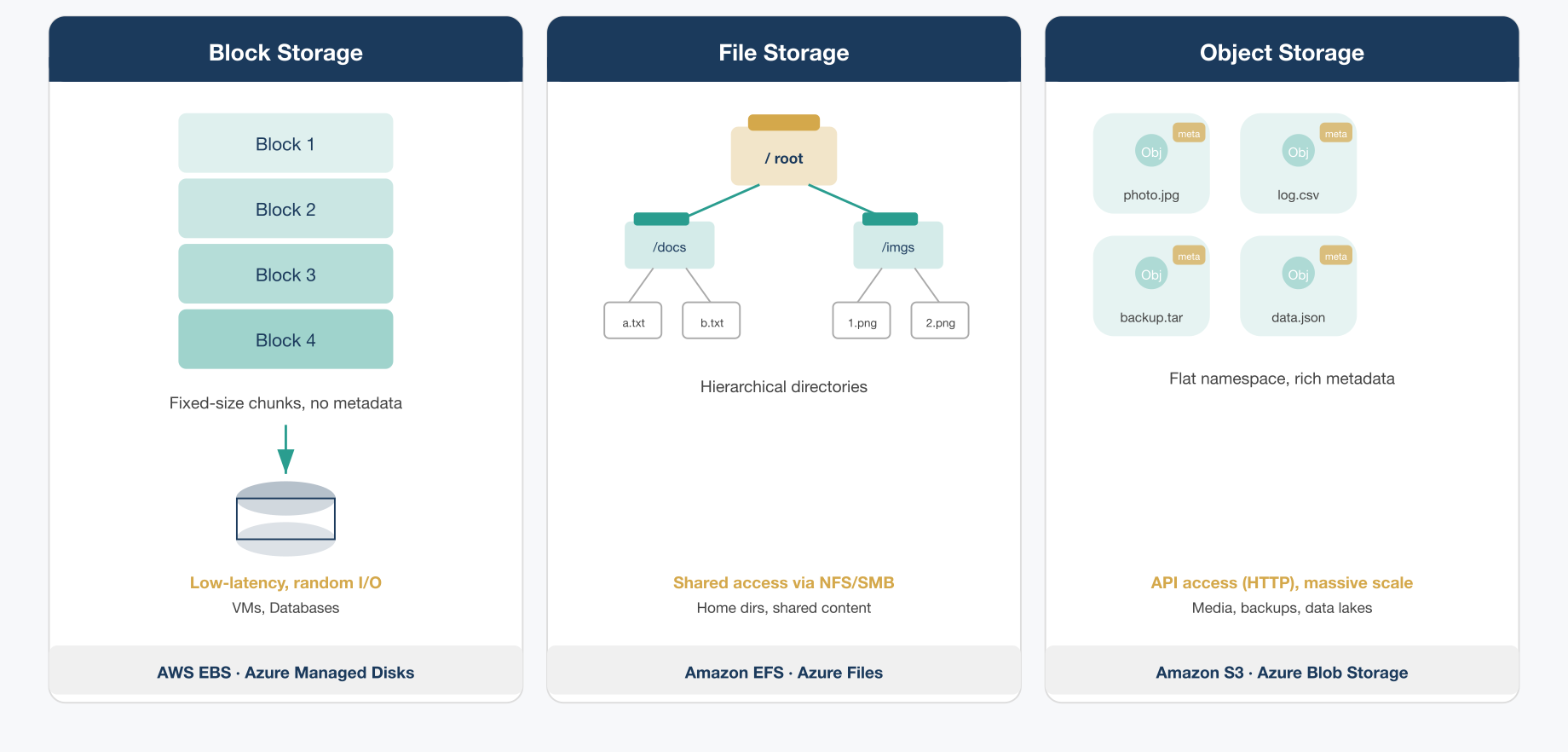
One of the foundational aspects of cloud data management is understanding cloud storage models. Cloud providers typically offer three primary types of storage: block storage, file storage, and object storage, each suited to different use cases. Additionally, large-scale data analytics and cluster computing often rely on distributed file systems that spread data across multiple machines. In this section, we define each storage model, compare their strengths and limitations, and explain distributed file system concepts.
This page titled 11.2: Cloud Storage Modes and Distributed File Systems was last modified on Tue, 22 Sep 2026 21:13:28 GMT and is shared under a CC BY 4.0 license and was authored, remixed, and/or curated by Felix Amoruwa.
The book could not be loaded just now.