Opening the book…
Problem 24-1
(a) N-Methylethylamine
(b) Tricyclohexylamine
(c) N-Ethyl-N-methylcyclohexylamine
(d) N-Methylpyrrolidine
(e) Diisopropylamine
(f) 1,3-Butanediamine
Problem 24-2
(a) 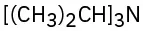
(b) 
(c) 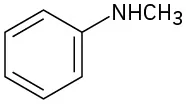
(d) 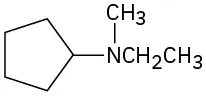
(e) 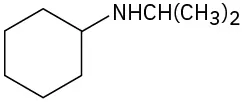
(f) 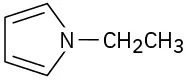
Problem 24-3
(a) 
(b) 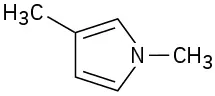
(c) 
(d) 
Problem 24-4
(a) CH3CH2NH2
(b) NaOH
(c) CH3NHCH3
Problem 24-5 Propylamine is stronger; benzylamine pKb = 4.67; propylamine pKb = 3.29
Problem 24-6
(a) p-Nitroaniline < p-Aminobenzaldehyde < p-Bromoaniline
(b) p-Aminoacetophenone < p-Chloroaniline < p-Methylaniline
(c) p-(Trifluoromethyl)aniline < p-(Fluoromethyl)aniline < p-Methylaniline
Problem 24-7 Pyrimidine is essentially 100% neutral (unprotonated).
Problem 24-8
(a) Propanenitrile or propanamide
(b) N-Propylpropanamide
(c) Benzonitrile or benzamide
(d) N-Phenylacetamide
Problem 24-9 The reaction takes place by two nucleophilic acyl substitution reactions.
Problem 24-11
(a) Ethylamine + acetone, or isopropylamine + acetaldehyde
(b) Aniline + acetaldehyde
(c) Cyclopentylamine + formaldehyde, or methylamine + cyclopentanone
Problem 24-13
(a) 4,4-Dimethylpentanamide or 4,4-dimethylpentanoyl azide
(b) p-Methylbenzamide or p-methylbenzoyl azide
Problem 24-14
(a) 3-Octene and 4-octene
(b) Cyclohexene
(c) 3-Heptene
(d) Ethylene and cyclohexene
Problem 24-15 H2CCHCH2CH2CH2N(CH3)2
Problem 24-16 1. HNO3, H2SO4; 2. H2/PtO2; 3. (CH3CO)2O; 4. HOSO2Cl; 5. aminothiazole; 6. H2O, NaOH
Problem 24-17
(a) 1. HNO3, H2SO4; 2. H2/PtO2; 3. 2 CH3Br
(b) 1. HNO3, H2SO4; 2. H2/PtO2; 3. (CH3CO)2O; 4. Cl2; 5. H2O, NaOH
(c) 1. HNO3, H2SO4; 2. Cl2, FeCl3; 3. SnCl2
(d) 1. HNO3, H2SO4; 2. H2/PtO2; 3. (CH3CO)2O; 4. 2 CH3Cl, AlCl3; 5. H2O, NaOH
Problem 24-18
(a) 1. CH3Cl, AlCl3; 2. HNO3, H2SO4; 3. SnCl2; 4. NaNO2, H2SO4; 5. CuBr; 6. KMnO4, H2O
(b) 1. HNO3, H2SO4; 2. Br2, FeBr3; 3. SnCl2, H3O+; 4. NaNO2, H2SO4; 5. CuCN; 6. H3O+
(c) 1. HNO3, H2SO4; 2. Cl2, FeCl3; 3. SnCl2; 4. NaNO2, H2SO4; 5. CuBr
(d) 1. CH3Cl, AlCl3; 2. HNO3, H2SO4; 3. SnCl2; 4. NaNO2, H2SO4; 5. CuCN; 6. H3O+
(e) 1. HNO3, H2SO4; 2. H2/PtO2; 3. (CH3CO)2O; 4. 2 Br2; 5. H2O, NaOH; 6. NaNO2, H2SO4; 7. CuBr
Problem 24-19 1. HNO3, H2SO4; 2. SnCl2; 3a. 2 equiv. CH3I; 3b. NaNO2, H2SO4; 4. product of 3a + product of 3b
Problem 24-21 4.1% protonated
Problem 24-23 The side-chain nitrogen is more basic than the ring nitrogen.
Problem 24-25 (CH3)3CCOCH3 → (CH3)3CCH(NH2)CH3
This page titled 32.4.23: Chapter 24 was last modified on Thu, 09 May 2024 14:47:54 GMT and is shared under a CC BY-NC-SA 4.0 license and was authored, remixed, and/or curated by OpenStax via source content that was edited to the style and standards of the LibreTexts platform.
The book could not be loaded just now.