From LibreTexts, under CC BY 4.0, as the source states it; its equations are written in TeX, which the PDF shows typeset. This page at LibreTexts.
8.3: Monocots vs. Eudicots
Opening the book…
Monocots
Figure \(\PageIndex{1}\): Monocots like the grass shown on the left produce only one cotyledon (mono- for one, -cot for cotyledons). Eudicots (on right), also called dicots, get their name from having two cotyledons. Cotyledons are the first, fleshy leaves that enveloped the embryo as it grew. Image from Pengo, CC BY-SA 2.5, via Wikimedia Commons.Figure \(\PageIndex{2}\): This Trillium is a monocot, which you can tell because it is 3-merous. There are three sepals, three petals, six stamens, and three stigma lobes visible in the gynoecium. Monocots have floral parts in sets of three (3-merous). Photo by Maria Morrow, CC-BY 4.0.
Eudicots
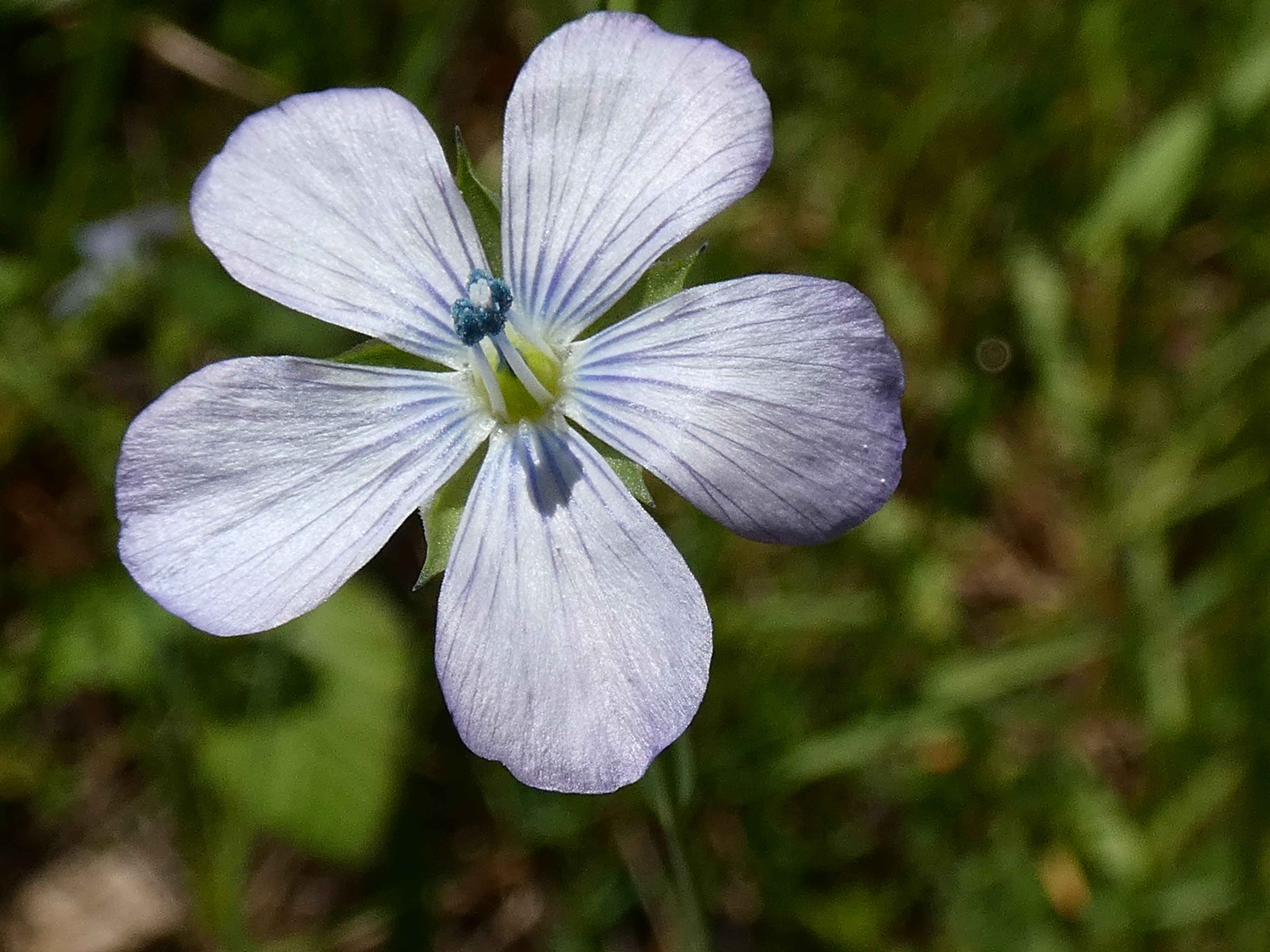
Figure \(\PageIndex{3}\): A eudicot seedling with two cotyledons. Photo by Maria Morrow, CC-BY 4.0.Figure \(\PageIndex{4}\): Eudicot flowers tend to be 4-merous or 5-merous. The Clarkia flower (first image) is 4-merous. We cannot see the calyx, but there are four petals, 8 stamens, and 4 stigma lobes. The Flax flower (second image) is 5-merous. There are five sepals poking out between the five petals and 5 stamens (with blue anthers!). The number of stigma lobes is not distinguishable in this image.Photos by Maria Morrow, CC-BY 4.0.