Opening the book…
Science as a Process
Many people think of science as a set of steps called the scientific method. In reality, science is not a rigid method. Science is an iterative process, meaning scientists often repeat steps, revise ideas, and ask new questions as they learn more.
Scientific investigations do not always follow the same path. One scientist might start with an observation in nature, while another might begin by analyzing existing data or reading research studies. New evidence can lead scientists to change a hypothesis, collect more data, or rethink an explanation. As a result, scientific knowledge grows and improves over time.
Environmental science is especially iterative because it combines ideas from many fields, including biology, chemistry, geology, economics, and social science. Environmental problems are often complex and involve interactions between natural and human systems. Scientists use evidence from many sources to better understand these interactions and to develop solutions.
Although scientific investigations vary, they often begin with observations and questions. Scientists then develop explanations, collect evidence, evaluate results, and share their findings with others. The process continues as new discoveries lead to new questions. In this way, science is not about finding final answers. It is an ongoing process of learning about the natural world.
Making Observations
An observation is something a scientist notices. Observations can come from direct experiences in nature or from information reported by other scientists.
A direct observation is something you personally see, hear, measure, or record. For example, you might notice more birds in your yard after you plant a native tree.
An indirect observation comes from information collected by others. For example, you might read a scientific study showing that birds are more common in neighborhoods with native trees.
The following example begins with a direct observation.
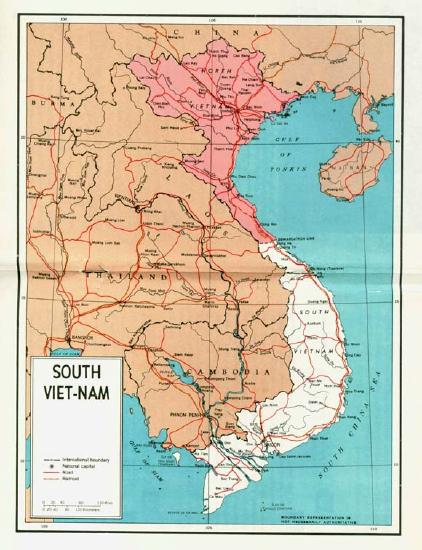
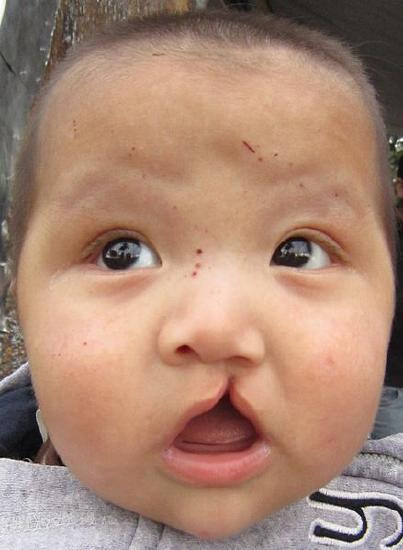
During the Vietnam War (figure \(\PageIndex{a}\)), people in North Vietnam reported an increase in birth defects. These reports led scientists to ask whether something in the environment could be causing the problem. Later, some Vietnam veterans who returned to the United States developed higher rates of certain cancers and other diseases. Scientists wondered whether these health problems could be connected to a common cause.
Observations often lead to new scientific questions.

Asking Questions
Observations often lead to questions. Scientists ask: What explains the pattern that was observed? A single observation can lead to many different questions. As reports of birth defects increased in Vietnam and health problems appeared in some Vietnam veterans, scientists began searching for possible causes. One question focused on Agent Orange, a herbicide used during the war to remove forest vegetation and improve visibility for military operations (figure \(\PageIndex{b-c}\)). Could exposure to Agent Orange (figure \(\PageIndex{d}\)). be linked to the birth defects and diseases that were being observed? This question became the starting point for further scientific investigation.
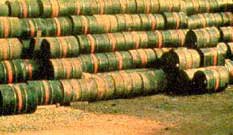

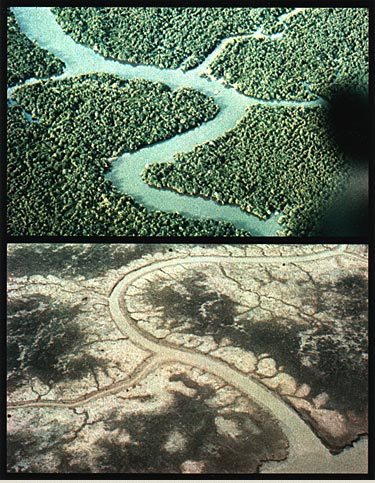
Figure \(\PageIndex{c}\): A healthy mangrove forest (top), and another forest after application of Agent Orange. Image by unknown author(opens in new window) (public domain).

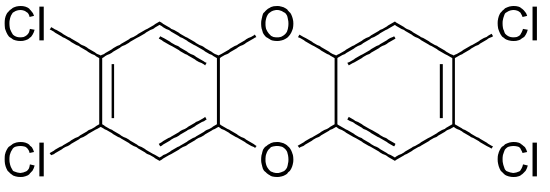 Figure \(\PageIndex{d}\): The chemical structure of TCDD (2,3,7,8-tetrachlorodibenzo-p-dioxin), which is produced when synthesizing the chemicals in Agent Orange. It contaminates Agent Orange at low but harmful concentrations. Image by Emeldir(opens in new window) (public domain).

Forming Hypotheses
A hypothesis is a possible answer to a scientific question that can be tested with evidence. Hypotheses are not "educated guesses" They predict what will happen and provide a scientific reason for that prediction. They also have a particular format and must be a statement.
Consider the following examples:
- Simple hypothesis: Agent Orange affects rates of birth defects and disease.
- Better hypothesis: Agent Orange increases rates of birth defects and disease.
- Stronger hypothesis: Agent Orange increases rates of birth defects and disease because these health problems have been reported more often in people exposed to the herbicide.
Scientists generally prefer hypotheses that are both supported by evidence and as simple as possible. This idea is known as Occam's Razor. Occam's Razor states that when two or more hypotheses explain the same observations equally well, scientists usually prefer the simpler explanation. A simpler explanation is often easier to test and requires fewer assumptions.
To be useful, a hypothesis should make a clear prediction that can be tested through observation or experimentation. A common format is:
If [proposed cause], then [predicted outcome], because [scientific reasoning].
For example:
- If exposure to Agent Orange causes developmental health problems, then mice exposed to TCDD, a contaminant found in Agent Orange, during development will have a higher rate of birth defects than unexposed control mice because TCDD may interfere with normal development.
A well-written hypothesis helps guide the design of an experiment and identifies the evidence that would support or refute the proposed explanation.
A hypothesis must be testable. Scientists must be able to collect observations or data that could support or refute the hypothesis. For example, the hypothesis "bears prefer blue berries because they like the color blue" is difficult to test because scientists cannot directly measure what a bear is thinking.
Scientists test hypotheses by collecting evidence through observations, experiments, or other investigations. The goal is not to prove a hypothesis is true. Science is not based on "proof", but instead on observable evidence. Therefore, scientists look for evidence that supports or refutes a hypothesis.
If the results do not support the predictions, the hypothesis may need to be revised or rejected. If the results support the prediction, the hypothesis is supported--and probably will undergo further testing such as leading to a new round of questions and hypotheses. However, even a well-supported hypothesis can be challenged by new evidence in the future.
For this reason, scientific knowledge is always open to revision. As new evidence becomes available, explanations can be improved, refined, or replaced by better ones.
Experiment
There are many ways to do science, and not all scientific studies involve experiments. Some scientists conduct experiments, while others make observations in nature, analyze existing data, or use computer models.
When scientists design a study, they identify the variables. A variable is any factor that can change.
The independent variable is the factor that scientists think may be causing a change. In an experimental study, the scientist changes or manipulates the independent variable.
The dependent variable is the factor that is measured. It is the response to the independent variable.
Other factors can also affect the dependent variable. These are called confounding variables. Scientists try to keep confounding variables the same across groups so they do not affect the results.
For example, in a study of Agent Orange, exposure to Agent Orange is the independent variable because it is the factor being investigated. The dependent variable could be the rate of birth defects or disease. Other factors, such as age, diet, exercise, and family history, can also affect health. These are potential confounding variables. Scientists try to control these factors so they do not influence the results.
In an experimental study, scientists manipulate the independent variable and measure the response. The condition being tested is called the treatment.
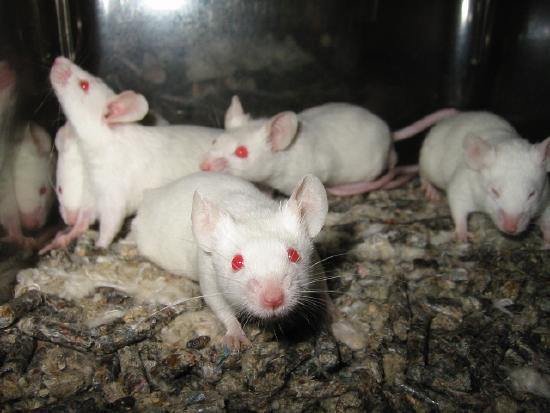
For example, scientists could expose developing mice to TCDD, a contaminant found in Agent Orange, and then measure the frequency of birth defects. In this study, TCDD exposure is the independent variable, and the frequency of birth defects is the dependent variable (figure \(\PageIndex{e}\)).
Most experiments include both a treatment group and a control group. The treatment group receives the treatment being tested. The control group does not receive the treatment.
The control group provides a baseline for comparison. It shows what happens under normal conditions when the treatment is absent. Scientists compare the treatment group and the control group to determine whether the treatment affected the dependent variable.
In this example, the treatment group would include mice exposed to TCDD. The control group would include mice that were not exposed to TCDD but were otherwise treated the same way. If birth defects occur more often in the treatment group than in the control group, the results support the hypothesis that TCDD affects development.
A well-designed experiment changes only one independent variable at a time. This helps scientists determine whether changes in the dependent variable are caused by the independent variable rather than by confounding variables. In the Agent Orange study, scientists would need to control potential confounding variables such as the age, genetics, diet, housing conditions, and overall health of the mice. If these factors differ between the treatment group and the control group, they could influence the frequency of birth defects and make it difficult to determine whether TCDD exposure caused the observed effects. By keeping confounding variables as similar as possible between groups, scientists can be more confident that any differences in outcomes are due to the independent variable rather than another factor.
To summarize:
- Independent variable = the factor being tested (TCDD exposure)
- Dependent variable = the factor being measured (birth defects in mice)
- Confounding variables = other factors that could also affect the dependent variable (diet, genetics, age, etc.)
- Control group = mice not exposed to TCDD
- Treatment group = mice exposed to TCDD

If an experiment is not possible or would be unethical, scientists may conduct an observational study. In an observational study, scientists do not manipulate the independent variable. Instead, they collect data and compare groups that differ naturally in their level of exposure to a possible cause.
For example, scientists could compare the health of Vietnam veterans who experienced different levels of exposure to Agent Orange. Because researchers cannot control who was exposed, they must observe and analyze patterns in existing populations.
Whether a study is experimental or observational, scientists need enough data to distinguish real patterns from random variation. For this reason, scientific studies include many replicates. Replicates are multiple individuals, samples, or observations within a study. Using many replicates helps scientists determine whether a pattern is caused by the independent variable rather than by natural differences among individuals.
Scientists also expect studies to be repeatable. A study is repeatable if other researchers can follow the same methods and obtain similar results. Repeatability helps scientists evaluate whether the findings are reliable.
In addition, important scientific ideas are tested by multiple studies. When many independent studies reach similar conclusions, scientists gain greater confidence in the results. This process helps build scientific knowledge over time.
Results
After scientists design a study, they collect data and analyze the results. Analyzing data helps scientists identify patterns and determine whether the evidence supports the hypothesis. Statistics are often used to summarize data, compare groups, and determine whether observed differences are likely due to the independent variable rather than random chance.
In the Agent Orange example, scientists conducted experiments using mice. Some developing mice were exposed to high levels of 2,4,5-T, a component of Agent Orange, or TCDD, a contaminant found in Agent Orange. Other mice served as the control group and were not exposed.
The results showed that mice exposed to 2,4,5-T or TCDD developed cleft palate birth defects more often than mice in the control group (figure \(\PageIndex{f}\)). Scientists also found that mouse embryos exposed to TCDD were more likely to die before birth than embryos in the control group.
These results support the hypothesis that exposure to chemicals found in Agent Orange can interfere with normal development. However, as with all scientific studies, the results do not prove the hypothesis is correct. Scientists gain confidence in an explanation when multiple studies produce similar results and the evidence continues to support the hypothesis.

An observational study of Korean veterans who served in the Vietnam War found that veterans who reported higher levels of Agent Orange exposure also had higher rates of several health problems. These included some types of cancer, diseases of the cardiovascular and nervous systems, skin disorders, and psychological disorders.
To understand these results, it is helpful to understand different types of relationships between variables. A positive correlation occurs when two variables change in the same direction. As one variable increases, the other also increases. A negative correlation occurs when two variables change in opposite directions. As one variable increases, the other decreases. No correlation occurs when there is no consistent relationship between two variables. Changes in one variable do not predict changes in the other.
Some relationships are more complex and do not follow a straight-line pattern. These are called non-linear relationships. In a non-linear relationship, the variables are related, but the pattern may curve, level off, or change direction. For example, plant growth may increase as fertilizer is added, but only up to a certain point. Beyond that point, adding more fertilizer may have little effect or even reduce plant growth.
The study of Korean veterans found a positive correlation between Agent Orange exposure and disease. Veterans who reported higher levels of exposure also reported higher rates of health problems.
However, a correlation does not prove that one variable caused the other. Correlation is not the same as causation. Observational studies can identify patterns, but they cannot always rule out other explanations. To establish a cause-and-effect relationship, scientists usually need additional evidence from experiments, multiple studies, or other independent lines of evidence.
Understanding the difference between correlation and causation is an important part of scientific thinking. Positive, negative, and non-linear correlations can show that variables are related, but additional evidence is needed to determine whether one variable causes changes in another.
In the case of Agent Orange, scientists did not rely on a single study. Observational studies of veterans were combined with experimental studies using mice and other lines of evidence. Together, these studies provided stronger evidence that chemicals found in Agent Orange were linked to harmful health effects.
Conclusion
After analyzing the data, scientists determine whether the evidence supports their hypothesis. In the Agent Orange example, mice exposed to TCDD and 2,4,5-T developed cleft palate birth defects more often than mice in the control group. This result matched the prediction made by the hypothesis. Observational studies also found that veterans exposed to Agent Orange had higher rates of several diseases.
Together, these findings support the hypothesis that chemicals found in Agent Orange can increase the risk of birth defects and disease. However, scientists do not consider a hypothesis "proven". New evidence can always lead to improved explanations or new questions.
Science is an ongoing process (figure \(\PageIndex{h}\)). Each study adds to our understanding, but no single study provides a final answer. Even when a hypothesis is strongly supported, scientists continue to test it in different ways and under different conditions. For example, researchers continue to study Agent Orange today to better understand its long-term effects on human health and the environment.
As new evidence is collected, scientific explanations become stronger, more detailed, and more reliable.
 Figure \(\PageIndex{h}\): The Process of Science. Erin Rempala (made with Biorender.com)
Scientific findings can influence decision making. Evidence about the health effects of Agent Orange led the United States to provide disability compensation and health benefits to many veterans who were exposed and later developed certain diseases. Scientists also discovered that TCDD, a contaminant found in Agent Orange, could harm human health and the environment. As a result, 2,4,5-T, one of the herbicides used to make Agent Orange, was banned in the United States. Although the other component, 2,4-D, is still used in some herbicides today, modern products do not contain the same combination of chemicals found in Agent Orange. The United States has also worked with Vietnam to clean up sites that remain contaminated with TCDD. These actions show how scientific evidence can influence public policy and environmental decision making.
Building on the Work of Others
Major scientific discoveries sometimes change the way people understand the world. However, even these breakthroughs rarely appear suddenly. Most scientific advances build on ideas, observations, and evidence collected by earlier scientists.
A good example is evolutionary theory. Long before Charles Darwin published his ideas, several scientists had suggested that species change over time. Charles Darwin's grandfather, Erasmus Darwin, proposed that living things were connected through common ancestry and could change over generations. Later, Jean-Baptiste Lamarck argued that species evolve in response to their environment, although scientists no longer accept his proposed mechanism for how evolution occurs.
Darwin built on these earlier ideas as well as evidence gathered by geologists, naturalists, and explorers. For example, Charles Lyell's work showed that Earth changes slowly over long periods of time, and Thomas Malthus wrote about how populations can grow faster than their resources. These ideas helped Darwin develop his explanation of evolution by natural selection.
In the 1850s, Alfred Russel Wallace independently reached many of the same conclusions about evolution by natural selection while studying plants and animals in Southeast Asia. When Wallace shared his ideas with Darwin, both scientists realized they had arrived at a similar explanation for how species change over time. Their findings were jointly presented in 1858. Wallace's discovery encouraged Darwin to publish his own work more quickly. Darwin later published On the Origin of Species, which presented extensive evidence for evolution by natural selection and helped establish evolutionary theory as a foundation of modern biology (figure \(\PageIndex{g}\)).
Most scientific progress, however, happens gradually. Scientists build on the work of those who came before them. Each study adds new evidence, improves existing ideas, or answers a small part of a larger question. Over time, these contributions expand scientific knowledge.
Advances in science are also driven by new tools and technologies. For example, the invention of the light microscope allowed scientists to observe cells for the first time. Later, the electron microscope revealed structures that were too small to be seen with earlier tools. New technologies often lead to new discoveries and new questions.
Science advances through the combined efforts of many scientists working across generations. New discoveries, new technologies, and new ideas all contribute to a growing understanding of the natural world.

References
Institute of Medicine (US) Committee to Review the Health Effects in Vietnam Veterans of Exposure to Herbicides. Veterans and Agent Orange: Health Effects of Herbicides Used in Vietnam(opens in new window). Washington (DC): National Academies Press (US); 1994. 2, History of the Controversy Over the Use of Herbicides.
Neubert, D., Dillmann, I. Embryotoxic effects in mice treated with 2,4,5-trichlorophenoxyacetic acid and 2,3,7,8-tetrachlorodibenzo-p-dioxin(opens in new window). Naunyn-Schmiedeberg's Arch. Pharmacol. 272, 243–264 (1972).
Stellman, J. M., & Stellman, S. D. (2018). Agent Orange During the Vietnam War: The Lingering Issue of Its Civilian and Military Health Impact(opens in new window). American journal of public health, 108(6), 726–728.
Yi, S. W., Ohrr, H., Hong, J. S., & Yi, J. J. (2013). Agent Orange exposure and prevalence of self-reported diseases in Korean Vietnam veterans(opens in new window). Journal of preventive medicine and public health = Yebang Uihakhoe chi, 46(5), 213–225.
Attribution
This page was heavily revised and rewritten by Erin Rempala and contains adapted content originally authored by Melissa Ha and Rachel Schleiger is licensed CC BY-NC-SA 4.0.
Modified by Melissa Ha from the following sources:
- The Process of Science from Environmental Biology by Matthew R. Fisher (licensed under CC-BY(opens in new window))
- Scientific Methods from Biology by John W. Kimball (licensed under CC-BY(opens in new window))
This page titled 1.1: The Process of Science was last modified on Tue, 28 Jul 2026 13:17:23 GMT and is shared under a CC BY-NC-SA 4.0 license and was authored, remixed, and/or curated by Erin Rempala.
The book could not be loaded just now.