Opening the book…
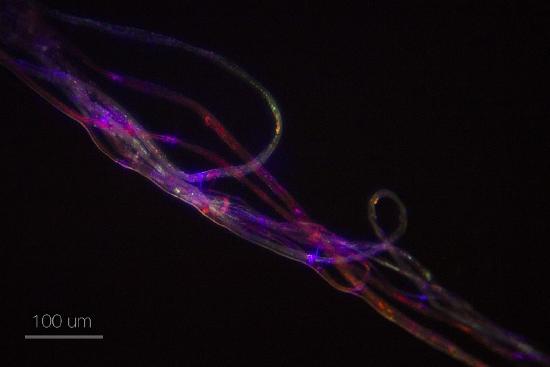
Water potential, transpiration, and stomatal regulation influence how water and nutrients are transported in plants. Water potential refers to the potential energy in water, and water moves towards the areas with the lowest water potential. Water is ultimately pulled to the top of the plant (cohesion-tension theory), and lost through transpiration through stomata. Complex mechanisms control stomatal opening and closure. Both adaptations that increase absorption of water through the roots (Figure \(\PageIndex{1}\)) and those that limit transpiration ensure that plants collect and retain enough water.
Attribution
Curated and authored by Melissa Ha using 30.5 Transport of Water and Solutes in Plants from Biology 2e by OpenStax (licensed CC-BY). Access for free at openstax.org.
This page titled 11.5: Water Transport was last modified on Tue, 26 Nov 2024 19:25:20 GMT and is shared under a CC BY-SA 4.0 license and was authored, remixed, and/or curated by Tom Buckley.
The book could not be loaded just now.