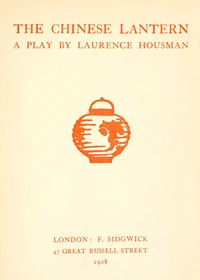
The Chinese lantern
"The Chinese Lantern" by Laurence Housman is a play written in the early 20th century. The story unfolds in a Chinese studio, introducing a range of characters, including Olangtsi, a Master of Arts, his son Yunglangtsi, and various apprentices and craftsmen. The play focuses on themes of artistic ambition, the quest for identity, and the complexities of social relationships, particularly through the dynamics between the students and their master. The opening of the play sets an engaging scene in the studio, where lazy students are preparing for the Feast of Lanterns, showcasing their indolent ways contrasted against Tikipu, the diligent drudge, who devotes himself to grinding colors. As the characters exchange witty banter filled with philosophical musings about art and destiny, it becomes evident that Yunglangtsi, despite his seeming apathy toward art, is at the center of familial expectations and conflicts. The dialogue reveals the frustrations surrounding artistic representation, financial struggles, and the contrasting aspirations of the individuals involved, providing a strong foundation for the unfolding drama as the Feast approach.
Summary written by Project Gutenberg, by machine.
- Language
- English
- On Project Gutenberg since
- 24 May 2023
- Read in the last 30 days
- 412 times at Project Gutenberg
More by Laurence Housman
See all: More by Laurence Housman
A doorway in Fairyland
Stories from The Arabian Nights

Rue
Princess Badoura: A tale from the Arabian Nights
Moonshine & Clover
Possession: A Peep-Show in Paradise
The Field of Clover
An Englishwoman's Love-Letters
The house of joy

The Blue Moon
King John of Jingalo: The Story of a Monarch in Difficulties
Ploughshare and Pruning-Hook: Ten Lectures on Social Subjects
Lysistrata
Angels and Ministers, and Other Victorian Plays

Bethlehem: A Nativity Play
The snow man

Trimblerigg
The return of Alcestis
Bird in hand