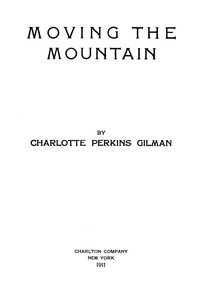
Moving the Mountain
"Moving the Mountain" by Charlotte Perkins Gilman is a novel written in the early 20th century, specifically around 1911. The story explores a future society where a man, John Robertson, awakens after thirty years of unconsciousness, discovering a dramatically altered world shaped by the empowerment of women and societal changes. The narrative reflects on themes of gender roles, societal progress, and the potential for a changed human condition. At the start of the novel, we meet John Robertson, who has been found lost and disoriented in Tibet after a long absence. He is reunited with his sister, Nellie, who reveals the wild changes that have taken place while he was gone. As he grapples with the shock of waking up in a time that has progressed greatly beyond his last memories, he learns about the advancements in women's rights and societal transformations that have taken place. Through John's perspective, we are introduced to his bewilderment about the social dynamics, especially regarding the roles of women in this new world, leading to a complex exploration of identity, progress, and the nature of change in human society.
Summary written by Project Gutenberg, by machine.
- Language
- English
- On Project Gutenberg since
- 2 December 2021
- Read in the last 30 days
- 547 times at Project Gutenberg
More by Charlotte Perkins Gilman
See all: More by Charlotte Perkins Gilman
Index of the Project Gutenberg Works of Charlotte Perkins Gilman

The Yellow Wallpaper

Herland

The home: its work and influence
Women and Economics
Concerning Children

The Man-Made World; Or, Our Androcentric Culture

The Crux: A Novel

What Diantha Did
Human Work

In this our world

De economische toestand der vrouw