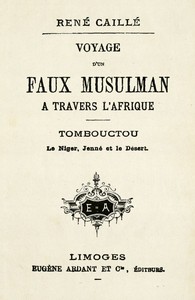
Voyage d'un faux musulman à travers l'Afrique
Tombouctou, le Niger, Jenné et le Désert
by René Caillié
"Voyage d'un faux musulman à travers l'Afrique" by René Caillié is a historical account written in the early 19th century. The narrative follows the author's remarkable journey as he disguises himself as a Muslim to traverse the mysterious and largely uncharted regions of Africa, specifically aiming to reach the fabled city of Timbuktu. Through his experiences, the book delves into themes of cultural exchange and the complexities of identity as he interacts with diverse African societies. The opening of the book sets the stage for this adventurous expedition by inviting readers to conceive a map of the world, from which the journey will unfold. It outlines Caillié’s preparations, including his need to blend in as a Muslim, and describes the vast and largely unknown landscapes he intends to traverse. We learn that he has a deep curiosity about the land, the people, and how their lives compare to those in Europe. Furthermore, it emphasizes the challenges he faces, including geopolitical tensions and the harsh realities of travel in unfamiliar territories, hinting at a rich exploration of both personal and cultural discovery as he embarks on this ambitious voyage.
Summary written by Project Gutenberg, by machine.
- Language
- French (Français)
- On Project Gutenberg since
- 6 June 2021
- Read in the last 30 days
- 406 times at Project Gutenberg