Deux romanciers de Provence: Honoré d'Urfé et Émile Zola
Le roman sentimental et le roman naturaliste
Edited by Emile Ripert
"Deux romanciers de Provence: Honoré d'Urfé et Émile Zola" by Edmond Rostand is an essay written in the late 19th century. This work explores the contrasting literary styles and societal impacts of two prominent Provençal authors: Honoré d’Urfé, known for his sentimental romance, and Émile Zola, a key figure in naturalism. Rostand delves into the creative worlds these authors inhabited, offering insights into their respective influences on French literature and culture. At the start of the essay, the author establishes the context for comparing the two writers by highlighting the rich literary heritage of Provence. He notes how each novelist represents a distinct literary tradition—Urfé embodying elegance and romantic idealism, while Zola reflects a more brutal and realistic portrayal of contemporary society. Rostand introduces the theme of nostalgia for a bygone era, mentioning his admiration for d’Urfé's ability to romanticize life, juxtaposed with a critical examination of Zola’s stark realism. The opening sets the stage for a deeper analysis of how these authors' unique styles link to deeper social changes within their time and underscores the complexities of provincial identity through the lens of literature.
Summary written by Project Gutenberg, by machine.
- Language
- French (Français)
- On Project Gutenberg since
- 30 March 2021
- Read in the last 30 days
- 300 times at Project Gutenberg
More by Edmond Rostand
See all: More by Edmond Rostand
Cyrano de Bergerac
Cyrano de Bergerac: An Heroic Comedy in Five Acts

Cyrano de Bergerac
L'Aiglon
The Romancers: A Comedy in Three Acts
Chantecler: Play in Four Acts
Συρανό δε Μπερζεράκ
Le Cantique de l'Aile

Cyrano de Bergerac: Viisinäytöksinen runomittainen sankarinäytelmä
L'Aiglon: Drame en six actes, en vers
Les Musardises
La Princesse lointaine: Pièce en quatre actes, en vers
La dernière nuit de Don Juan: poème dramatique en deux parties et un prologue

Les Romanesques: comédie en trois actes en vers
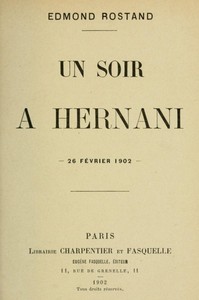
Un soir à Hernani, 26 février 1902