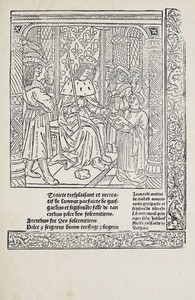
Traicté tresplaisant et recreatif de l'amour parfaicte de Guisgardus et Sigismunde fille de Tancredus prince des solernitiens
Translated by Leonardo Bruni · Translated by Jean Fleury
"Traicté tresplaisant et recreatif de l'amour parfaicte de Guisgardus et Sigismunde" is a romantic narrative likely written in the late 15th century. This work, which can be classified as a narrative poem, recounts the tragic love story between Guisgardus and Sigismunde, the beautiful daughter of Tancred, a prince of Salerno. The book explores themes of love, betrayal, and the consequences of passion in a way that reflects the social and familial pressures of the time. The narrative follows Sigismunde, a noble and lovely maiden, who after being widowed, falls deeply in love with Guisgardus, a humble servant. Their romance flourishes in secret, marked by letters and clandestine meetings through a hidden cave. However, their happiness is short-lived when Sigismunde’s father, Tancred, discovers their affair. In a fit of rage, he orders Guisgardus to be executed, which propels Sigismunde into despair. Faced with the loss of her beloved, Sigismunde ultimately chooses to end her own life rather than live without him, thereby uniting them even in death. The tragic ending highlights the powerful yet destructive nature of love, reflecting on loyalty and the consequences of societal constraints.
Summary written by Project Gutenberg, by machine.
- Language
- French (Français)
- On Project Gutenberg since
- 25 December 2020
- Read in the last 30 days
- 274 times at Project Gutenberg
More by Giovanni Boccaccio
See all: More by Giovanni Boccaccio
The Decameron of Giovanni Boccaccio
De Decamerone van Boccaccio

The Decameron, Volume I

Il Comento alla Divina Commedia, e gli altri scritti intorno a Dante, vol. 1
The Decameron (Day 1 to Day 5)

The Decameron, Volume II
The Decameron (Day 6 to Day 10)
Il Comento alla Divina Commedia, e gli altri scritti intorno a Dante, vol. 3

La Fiammetta
Il Comento alla Divina Commedia, e gli altri scritti intorno a Dante, vol. 2