
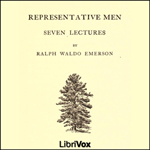
Representative Men: Seven Lectures
"Representative Men: Seven Lectures" by Ralph Waldo Emerson is a philosophical work written during the mid-19th century. This collection of lectures explores the influential figures in human history, examining how their ideas and actions shape society and serve as models for others. Emerson delves into the lives and philosophies of notable personalities such as Plato, Swedenborg, Montaigne, Shakespeare, Napoleon, and Goethe, emphasizing the role of great individuals in driving human progress and understanding. The opening of the text introduces Emerson's view on the significance of great men, stating that humanity's belief in such figures is natural and even poetic. He emphasizes that society derives joy and meaning from these paragons, who serve as lenses through which individuals can grasp complex ideas and aspirations. Emerson discusses the societal impact of these figures, asserting that their thoughts inspire collective action and serve as moral compasses. Through this exploration, he sets the stage for a deeper analysis of each representative figure in the subsequent lectures, revealing how they contribute to a greater understanding of human nature and the fabric of civilization.
Summary written by Project Gutenberg, by machine.
- Language
- English
- On Project Gutenberg since
- 1 August 2004
- Read in the last 30 days
- 1,956 times at Project Gutenberg
Listen to it: 2 recordings

More by Ralph Waldo Emerson
See all: More by Ralph Waldo Emerson
Essays by Ralph Waldo Emerson
Rubáiyát of Omar Khayyám, and Salámán and Absál

Index of the Project Gutenberg Works of Ralph Waldo Emerson
The Correspondence of Thomas Carlyle and Ralph Waldo Emerson, 1834-1872, Vol. I
The Correspondence of Thomas Carlyle and Ralph Waldo Emerson, 1834-1872, Vol II.

Nature

Essays — First Series

Essays — Second Series

Poems

The Conduct of Life

Society and solitude: Twelve chapters
Lectures and biographical sketches

English Traits
Letters and social aims
Miscellanies
Miscellanies

Compensation
Natural history of intellect, and other papers

May-Day, and Other Pieces

L'anima, la natura e la saggezza
More from the shelf “Biographies”
See all: More from the shelf “Biographies”
Famous Affinities of History: The Romance of Devotion. Vol 1-4, Complete

Susan B. Anthony

Milton
Life of Harriet Beecher Stowe

Memoirs of the Private Life, Return, and Reign of Napoleon in 1815, Vol. I

Prince Henry the Navigator, the Hero of Portugal and of Modern Discovery, 1394-1460 A.D.

The Every-day Life of Abraham Lincoln

Queen Victoria
History of Julius Cæsar, Vol. 1 of 2
Biographical Notes on the Pseudonymous Bells

The Life of William Ewart Gladstone, Vol. 1 (of 3)

Famous Men of the Middle Ages

Eminent Victorians

Robert Louis Stevenson: A Record, an Estimate, and a Memorial

Andrew Marvell
Martin Luther
History of Julius Cæsar, Vol. 2 of 2

William Lloyd Garrison, the Abolitionist

George Borrow and His Circle