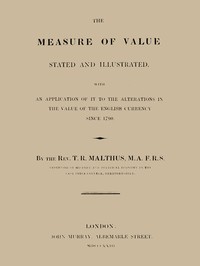
The Measure of Value Stated and Illustrated
With an Application of it to the Alterations in the Value of the English Currency since 1790
"The Measure of Value Stated and Illustrated" by T. R. Malthus is a scientific publication written in the early 19th century. This work explores the concepts of value, particularly focusing on the relationship between the value of goods and currency in the context of economic theory. It aims to establish a measure of value that can accurately reflect the worth of commodities amid varying economic conditions. In the book, Malthus delves into the two principal meanings of value: "value in use" and "value in exchange." He argues that a reliable measure of value is crucial for understanding economic dynamics, specifically in evaluating wages, salaries, and overall purchasing power across time and different regions. Malthus highlights the roles of labor and profits in determining the natural prices of commodities, and discusses how changes in profits and the state of demand and supply impact commodity values. The work ultimately seeks to articulate a method for calculating the absolute and relative value of goods, emphasizing the necessity of using labor as a yardstick for economic assessment.
Summary written by Project Gutenberg, by machine.
- Language
- English
- On Project Gutenberg since
- 15 June 2020
- Read in the last 30 days
- 419 times at Project Gutenberg
More by T. R. Malthus
See all: More by T. R. Malthus
An Essay on the Principle of Population

Observations on the Effects of the Corn Laws, and of a Rise or Fall in the Price of Corn on the Agriculture and General Wealth of the Country

An Inquiry into the Nature and Progress of Rent, and the Principles by Which It is Regulated

The Grounds of an Opinion on the Policy of Restricting the Importation of Foreign Corn