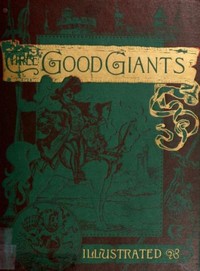
Three Good Giants
Whose Ancient Deeds are recorded in the Ancient Chronicles
Compiled by John Bull Smith Dimitry · Illustrated by Gustave Doré · Illustrated by Albert Robida
"Three Good Giants" by François Rabelais is a fictional compilation written in the late 19th century, adapted by John Dimitry. This work appears to be a whimsical retelling of the famed giants from Rabelais's original novels, particularly focusing on Grandgousier, Gargantua, and Pantagruel. Through their humorous and larger-than-life adventures, the story likely intertwines themes of merriment, folly, and the unexpected nature of these colossal characters, presenting them in a far more positive and entertaining light than they have sometimes been portrayed. The opening of the tale introduces readers to the origins of the giants, tracing their lineage back to a mythical past where their existence coincides with the "Year of Medlars." It describes how ordinary humans, after overindulging in this delicious fruit, began to grow into giants. The first of these giants, Chalbroth, sets the stage for a long line leading to King Grandgousier, who embodies joviality and generosity. The narrative tonally balances between humor, the absurdities of life, and the heartwarming relationships among its characters, effectively inviting readers into a fantastical world where giants react with remarkably human-like impulses and emotions.
Summary written by Project Gutenberg, by machine.
- Language
- English
- On Project Gutenberg since
- 9 April 2019
- Read in the last 30 days
- 566 times at Project Gutenberg
Listen to it
More by François Rabelais
See all: More by François Rabelais
Index of the Project Gutenberg Works of Rabelais
Gargantua and Pantagruel
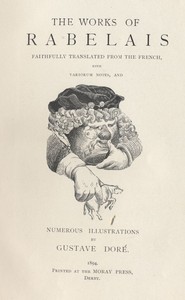
Gargantua and Pantagruel, Illustrated, Book 1
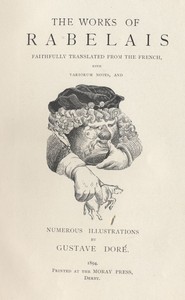
Gargantua and Pantagruel, Illustrated, Book 4
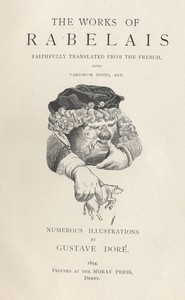
Gargantua and Pantagruel, Illustrated, Book 3
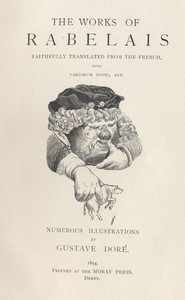
Gargantua and Pantagruel, Illustrated, Book 2