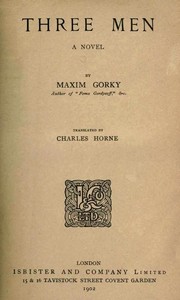
Three Men: A Novel
by Maksim Gorky
Translated by Charles Horne
"Three Men: A Novel" by Maksim Gorky is a work of fiction written in the late 19th century. The story revolves around the lives of three men—Antipa, his son Jakov, and his brother Terenti—unfolding against a backdrop of rural Russian life, emphasizing themes of solitude, existential struggle, and the quest for understanding amidst the complexities of family dynamics and societal expectations. The opening introduces Antipa Lunev as a pious hermit whose past burdens lead him to a life of prayer and isolation, setting the stage for an exploration of his legacy and the conflicting paths chosen by his sons. The beginning of the novel paints a vivid picture of Antipa's life, reflecting on his transformation from a worldly peasant to a hermit haunted by a profound sense of repentance. Following his death, the narrative shifts to his sons—Jakov, a rebellious and reckless figure, and Terenti, his timid, hunchbacked brother. The story hints at the challenges they face as they navigate their father's legacy and the struggles of rural life. Jakov's antagonistic relationship with society contrasts with Terenti's quiet endurance, revealing a tension between individual desires and familial responsibilities. As they deal with their father's stark choices and their consequences, the boys’ experiences encapsulate the harsh realities of life, underscored by Gorky's poignant observations on faith, morality, and human resilience.
Summary written by Project Gutenberg, by machine.
- Language
- English
- On Project Gutenberg since
- 28 January 2018
- Read in the last 30 days
- 569 times at Project Gutenberg
More by Maksim Gorky
See all: More by Maksim Gorky
Tales from Gorky
The Lower Depths: A Drama in Four Acts
Reminiscences of Anton Chekhov
Mother
In the World
The Man Who Was Afraid
Tales of Two Countries
A Mãe

Through Russia
The Confession: A Novel

The Spy: The Story of a Superfluous Man
Orlóff and His Wife: Tales of the Barefoot Brigade
Creatures That Once Were Men
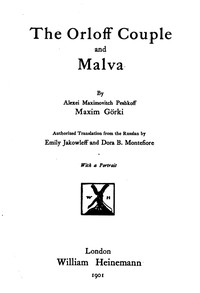
The Orloff Couple, and Malva
Creatures That Once Were Men
The Outcasts, and Other Stories
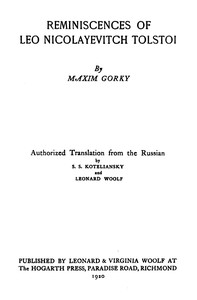
Reminiscences of Leo Nicolayevitch Tolstoi
Twenty-six and One, and Other Stories
Kolme kertomusta