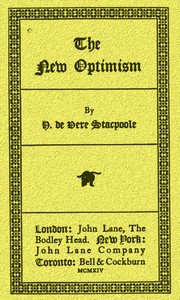
The New Optimism
"The New Optimism" by H. De Vere Stacpoole is a philosophical treatise written in the early 20th century. This work explores themes of evolution, the nature of existence, and the inherent goodness of the universe through a dialogue between two characters discussing humanity's past and its trajectory moving forward. The book posits that understanding our evolutionary heritage can illuminate the positive potential of life and the universe itself. At the start of the book, the narrator observes the sea while conversing with a companion about the fascination of water, which leads to discussions on evolution, consciousness, and the struggle between benevolence and malevolence in the universe. The narrator explains that life has evolved from a chaotic state into a complex web of relationships, emphasizing a journey from ferocity to kindness. Their dialogue delves into the theme of universal development toward goodness, establishing that the earth and life have a coherent meaning that transcends apparent chaos and suffering. As they examine the transformations from simple forms of life to complex beings like humans, the conversation highlights a belief in a world spirit propelling humanity toward beneficial outcomes, despite setbacks and challenges.
Summary written by Project Gutenberg, by machine.
- Language
- English
- On Project Gutenberg since
- 3 June 2017
- Read in the last 30 days
- 526 times at Project Gutenberg
More by H. De Vere Stacpoole
See all: More by H. De Vere Stacpoole
The Blue Lagoon: A Romance
The Beach of Dreams: A Romance

The Man Who Lost Himself
The Ship of Coral

The Ghost Girl

Sea Plunder

The Man Who Found Himself (Uncle Simon)

The Drums of War
The Pearl Fishers
The Presentation
Garryowen

Death, the Knight, and the Lady: A Ghost Story
The Rapin

Vanderdecken
Patsy

Satan: A Romance of the Bahamas
The Crimson Azaleas: A Novel
The Garden of God

The Cottage on the Fells