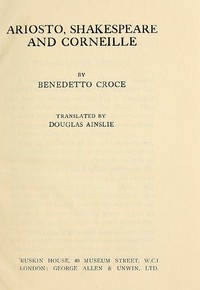
Ariosto, Shakespeare and Corneille
Translated by Douglas Ainslie
"Ariosto, Shakespeare and Corneille" by Benedetto Croce is a collection of literary criticism written in the early 20th century. The text offers an analysis of the works of three prominent literary figures: Ludovico Ariosto, William Shakespeare, and Pierre Corneille. The focus lies primarily on the aesthetic values and the underlying principles that govern their respective poetic expressions, with an emphasis on Croce’s own philosophical theories regarding art and aesthetics. At the start of the work, the translator’s preface outlines the intent behind Croce’s criticism, asserting the significance of the aesthetic experience in understanding poetry beyond mere admiration. The text begins to explore the poetry of Ludovico Ariosto, highlighting the complexities surrounding interpretations of his famous poem, "Orlando Furioso." The author reflects on the harmony, sentiment, and human experiences expressed within Ariosto's works, setting the stage for a broader inquiry into the relationships between art, emotion, and philosophical thought. The analysis emphasizes the need for a profound understanding of art that transcends superficial gratifications, asserting that true poetic value combines intuitive experience and intellectual engagement.
Summary written by Project Gutenberg, by machine.
- Language
- English
- On Project Gutenberg since
- 15 February 2017
- Read in the last 30 days
- 778 times at Project Gutenberg
More by Benedetto Croce
See all: More by Benedetto Croce
Æsthetic as science of expression and general linguistic
Theory & History of Historiography
The Philosophy of Giambattista Vico
The Philosophy of the Practical: Economic and Ethic
Aesthetic as Science of Expression and General Linguistic
Historical materialism and the economics of Karl Marx