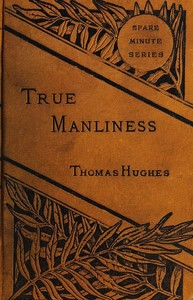
True Manliness
From the Writings of Thomas Hughes
Introduction by James Russell Lowell · Compiled by E. E. Brown
"True Manliness" by Thomas Hughes is a reflective philosophical work written in the late 19th century. The book explores the concept of manliness, delving into the attributes that define true courage and character, particularly in relation to Christian values. Through discussions of historical examples and moral dilemmas, Hughes emphasizes the importance of courage in the face of challenges and the higher ideals of selflessness, loyalty, and truthfulness. At the start of the book, Hughes engages the reader with a preface that outlines his life and influences, touching on his upbringing, education, and formative experiences. He presents reflections on courage, asserting that true manliness emerges through moral effort and the struggle against evil. Hughes distinguishes between mere animal courage and a more noble form of courage rooted in self-sacrifice and duty, citing historical figures and their actions as exemplars of this higher manliness. His introductory ideas set the stage for a deeper exploration of what it means to live a life of integrity and purpose aligned with one's convictions.
Summary written by Project Gutenberg, by machine.
- Language
- English
- On Project Gutenberg since
- 9 July 2016
- Read in the last 30 days
- 719 times at Project Gutenberg
More by Thomas Hughes
See all: More by Thomas Hughes
Tom Brown's School Days
Tom Brown at Rugby

Tom Brown's School Days

Tom Brown at Oxford
Vacation Rambles
Loyola and the Educational System of the Jesuits
The Scouring of the White Horse; Or, The Long Vacation Ramble of a London Clerk
The Stranger's Handbook to Chester and Its Environs
Memoir of a Brother

The manliness of Christ