Viitta: Kertomus
Translated by Huugo Jalkanen
"Viitta: Kertomus" by Nikolai Vasilevich Gogol is a short story written in the early 19th century. The narrative centers on the life of a minor bureaucrat named Akaaki Akaakievitsch, who is portrayed as an unremarkable and modest government clerk. Through Satirical elements, the work explores themes of social class, human suffering, and the mundane yet cruel reality of bureaucratic life. The opening of the story introduces Akaaki Akaakievitsch, detailing his background and current position as a copyist in an unspecified government office. It describes his physical appearance and character traits, which include shyness and a strong commitment to his job, as he diligently works in a world that largely ignores him. The story presents a glimpse into his life, showcasing the cruelty and apathy he faces from his colleagues who mock him for his old and worn outer garment, a "viitta" (overcoat). As his struggles unfold, a deep sense of pity for his character is evoked, setting the stage for the larger narrative on his quest for dignity and respect amidst an indifferent bureaucratic system.
Summary written by Project Gutenberg, by machine.
- Language
- Finnish (Suomi)
- On Project Gutenberg since
- 13 April 2016
- Read in the last 30 days
- 390 times at Project Gutenberg
More by Nikolai Vasilevich Gogol
See all: More by Nikolai Vasilevich Gogol
Sämmtliche Werke 5: Dramatische Werke
Dead Souls
The Mantle, and Other Stories

The Inspector-General

Taras Bulba, and Other Tales

Der Mantel: Eine Novelle
Sämmtliche Werke 4: Mirgorod
Sämmtliche Werke 1: Die Abenteuer Tschitschikows oder Die toten Seelen I
Sämmtliche Werke 2: Die Abenteuer Tschitschikows oder Die toten Seelen II

Sämmtliche Werke 6: Arabesken, Prosaschriften, Rom
Sämmtliche Werke 7: Briefwechsel I

Tarass Boulba
Sämmtliche Werke 3: Abende auf dem Gutshof bei Dikanka; Phantastische Novellen

Home Life in Russia, Volumes 1 and 2
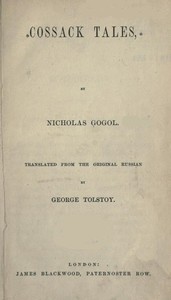
Cossack Tales

Kuolleet sielut

Sämmtliche Werke 8: Briefwechsel II, Hans Küchelgarten
Nenä
Reviisori: Huvinäytelmä viidessä näytöksessä