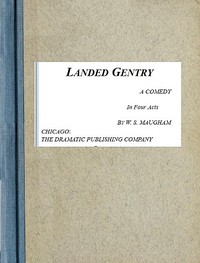
Landed Gentry: A Comedy in Four Acts
"Landed Gentry: A Comedy in Four Acts" by W. Somerset Maugham is a play likely written in the early 20th century. The narrative explores the complexities of social class and morality, focusing on the lives of the Insoley family, particularly Claude Insoley, as they navigate the pressures of societal expectations and personal dilemmas in rural England. The play delves into themes of reputation, the consequences of scandal, and the burgeoning class tensions of the time. At the start of "Landed Gentry," a gamekeeper, Gann, arrives at the residence of Claude Insoley. Claude informs Gann that his daughter, Peggy, who has returned from London under distressing circumstances, must leave the estate due to established rules concerning moral conduct. Tension heightens as Gann pleads for compassion, insisting that Peggy deserves a second chance, and this sparks discussions among various characters about the rigid social mores tied to land ownership and reputation. Meanwhile, Grace Insoley openly expresses her discontent with her life and the stifling nature of her surroundings, hinting at deeper conflicts within her marriage to Claude and foreshadowing trouble ahead as they navigate the fallout from Peggy’s predicament.
Summary written by Project Gutenberg, by machine.
- Language
- English
- On Project Gutenberg since
- 3 December 2015
- Read in the last 30 days
- 784 times at Project Gutenberg
More by W. Somerset Maugham
See all: More by W. Somerset Maugham
The Moon and Sixpence
Of Human Bondage

The Painted Veil

The Explorer
The Hero

The Trembling of a Leaf: Little Stories of the South Sea Islands
The Magician
On a Chinese Screen

Liza of Lambeth
Mrs. Craddock
Orientations
The Land of Promise: A Comedy in Four Acts
The Land of The Blessed Virgin; Sketches and Impressions in Andalusia

Plays: Lady Frederick, The Explorer, A Man of Honour
The Merry-go-round
The Circle: A Comedy in Three Acts
Jack Straw: A Farce in Three Acts
Cæsar's Wife: A Comedy in Three Acts

The Tenth Man: A Tragic Comedy in Three Acts