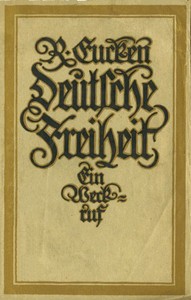
Deutsche Freiheit: Ein Weckruf
"Deutsche Freiheit: Ein Weckruf" by Rudolf Eucken is a philosophical treatise written in the early 20th century, specifically around the aftermath of World War I. This book engages with the idea of freedom, exploring both spiritual and political aspects of German identity in relation to the broader context of humanity. Eucken emphasizes the historical significance of German thought and culture while addressing contemporary societal challenges. In "Deutsche Freiheit: Ein Weckruf," Eucken argues that true freedom transcends mere political autonomy, intertwining with the spiritual and moral dimensions of human existence. He critiques both radical democracy and socialism for potentially undermining genuine freedom, positioning them as threats to the intrinsic spiritual character of the German people. Eucken draws on influential German figures—like Luther, Kant, and Goethe—to illustrate how their contributions manifest a deep-seated need for spiritual and intellectual freedom. He urges the German nation to awaken to its unique heritage of inner liberty, advocating for a revival of moral and intellectual responsibility as a means to cultivate both personal and collective freedom. Through this, Eucken presents a vision for a more cohesive and liberated society that honors its foundational values while also progressing beyond the constraints of his time.
Summary written by Project Gutenberg, by machine.
- Language
- German (Deutsch)
- On Project Gutenberg since
- 23 March 2014
- Read in the last 30 days
- 459 times at Project Gutenberg
More by Rudolf Eucken
See all: More by Rudolf Eucken
Life's Basis and Life's Ideal: The Fundamentals of a New Philosophy of Life
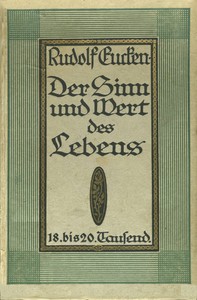
Der Sinn und Wert des Lebens
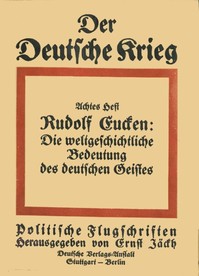
Die weltgeschichtliche Bedeutung des deutschen Geistes
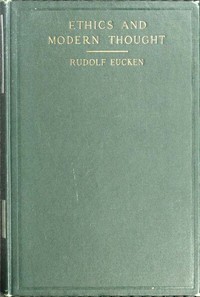
Ethics and Modern Thought: A Theory of Their Relations
Die Träger des deutschen Idealismus

Elämän tarkoitus ja arvo