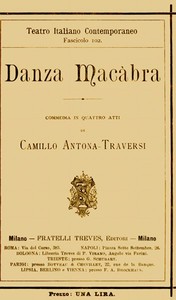
Danza macàbra
"Danza macàbra" by Camillo Antona-Traversi is a comedy in four acts written in the late 19th century. The play focuses on the decline of noble families in Rome, exploring themes of social change, aristocracy, and the stark contrast between old wealth and new societal forces. The main characters include the Prince Lanfranchi, his sons Maurizio and Fabrizio, and Donna Silvia, who find themselves navigating a world that is rapidly changing around them. The opening of "Danza macàbra" introduces the reader to a luxurious yet crumbling aristocratic world in Rome, providing a vivid setting that highlights the tension between past glories and present struggles. The narrative begins with a letter from the author expressing heartfelt gratitude to his mentor and outlining the inspiration behind the play—the fall of noble families and their fortunes. As characters come into focus, we witness the complex dynamics at play among them, particularly through the exchanges between the household staff and the princely family. Conversations reveal underlying tensions, financial concerns, and societal criticisms, setting the stage for the unfolding drama that delves into issues of privilege, responsibility, and the impact of societal change on personal relationships.
Summary written by Project Gutenberg, by machine.
- Language
- Italian (Italiano)
- On Project Gutenberg since
- 3 March 2013
- Read in the last 30 days
- 652 times at Project Gutenberg
More from the shelf “IT Teatro in prosa”
See all: More from the shelf “IT Teatro in prosa”
La crisi: commedia in tre atti

Tristi Amori
La Gioconda
La mandragola - La Clizia - Belfagor

Le commedie - lo astrologo

Diritti dell'Anima
Il trionfo: Dramma in quattro atti

La Cintia
La Tempesta

Sei personaggi in cerca d'autore

L'Olimpia
Un'avventura di viaggio
Una donna
Non fare ad altri...
La fine dell'amore
Infedele: Commedia in tre atti
Le disilluse
Sperduti nel buio: Dramma in tre atti
Fiori d'arancio