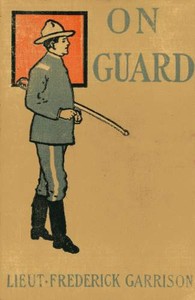
On Guard: Mark Mallory's Celebration
"On Guard: Mark Mallory's Celebration" by Upton Sinclair is a fictional work written in the early 20th century. The narrative revolves around the experiences of Cadet Mark Mallory at the West Point Military Academy, focusing on his spirited resistance against the hazing practices of the upperclassmen and the adventures that ensue among his peers. The story promises themes of camaraderie, youthful rebellion, and the fight for dignity among new cadets navigating a rigorous military culture. The opening of the book introduces Cadet Mark Mallory, who receives an encouraging letter from his friend Wicks Merritt about his anti-hazing efforts at West Point, where he has gained a reputation for standing up against upperclassmen bullies. Mark gathers his fellow plebes to discuss the contents of the letter, which reveals that other cadets, specifically at Annapolis, are encountering similar challenges with hazing. As the story unfolds, readers meet a vibrant group of characters, including Mark's friend "Texas," and they rally around their shared goals. The initial chapters set the stage for Mark's burgeoning leadership, the formation of camaraderie among the plebes, and their schemes to counteract the oppressive culture at the academy.
Summary written by Project Gutenberg, by machine.
- Language
- English
- On Project Gutenberg since
- 13 May 2011
- Read in the last 30 days
- 626 times at Project Gutenberg
More by Upton Sinclair
See all: More by Upton Sinclair
The Autobiography of Upton Sinclair
Index of the Project Gutenberg Works of Upton Sinclair
Boston
The Jungle
King Midas: a Romance

Tuhatvuotinen valtakunta
The Book of Life
The Profits of Religion, Fifth Edition
The Goose-step: A Study of American Education
The Fasting Cure
Mental Radio
A Prisoner of Morro; Or, In the Hands of the Enemy
The Profits of Religion: An Essay in Economic Interpretation
100%: the Story of a Patriot
King Coal
Oil!
The Brass Check: A Study of American Journalism
The Moneychangers
Mammonart: An essay in economic interpretation