On the nature of thought
by John Haslam
"On the Nature of Thought" by John Haslam, M.D. is a scientific publication written in the early 19th century, specifically in 1835. In this work, Haslam explores the intricacies of human thought and its profound relationship with language, arguing that thought primarily manifests in the formation of clear and coherent sentences. He delves into the physiological nature of thought, suggesting that understanding language is essential for articulating and thus comprehending thought itself. In the book, Haslam contends that while traditional philosophical approaches have focused heavily on abstract ideas divorced from language, true intellectual progress relies on the use of words as the fundamental medium of thought. He discusses how thoughts are constructed and communicated through language, emphasizing the roles of perception and sensation in forming ideas and how these ideas are inadequate on their own to constitute thought. The work serves as a critique of earlier metaphysical theories that have failed to adequately account for the connection between words and thought, positing that a genuine understanding of language will enhance intellectual faculties and lead to clearer reasoning and expression. Overall, Haslam’s essay invites readers to reconsider the essence of their thinking processes and the vital importance of language in framing their understanding of the world.
Summary written by Project Gutenberg, by machine.
- Language
- English
- On Project Gutenberg since
- 31 January 2010
- Read in the last 30 days
- 497 times at Project Gutenberg
More by John Haslam
See all: More by John Haslam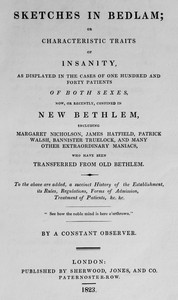
Sketches in Bedlam

Observations on madness and melancholy

A letter to the Right Honorable the Lord Chancellor, on the nature and interpretation of unsoundness of mind, and imbecility of intellect

Observations on insanity
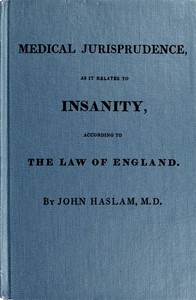
Medical jurisprudence as it relates to insanity, according to the law of England

Sound mind