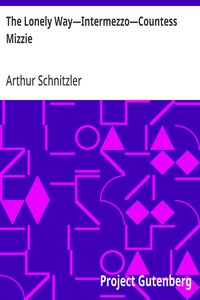
The Lonely Way—Intermezzo—Countess Mizzie
Three Plays
Translated by Edwin Björkman
"The Lonely Way—Intermezzo—Countess Mizzie" by Arthur Schnitzler is a collection of three plays written in the early 20th century. The works delve into themes of love, personal struggle, and the complexities of human relationships, set against the backdrop of early modern Vienna. The characters in Schnitzler's plays often embody the tensions between societal expectations and individual desires, making the collection a poignant exploration of human intimacy and existential themes. The opening of the first play, "The Lonely Way," introduces a family dynamic within the garden of Professor Wegrat's house, highlighting his interactions with his wife and children, as well as their acquaintances. As the characters converse, they navigate the weight of familial expectations, personal aspirations, and the looming presence of illness, which adds an undercurrent of melancholy. The dialogue reveals deep-seated fears and desires, particularly through the character of Johanna, who grapples with her mother's illness and the implications of their growing distance. This opening sets the stage for the unfolding emotional conflicts, inviting readers into the intricate webs of relationships that Schnitzler masterfully explores.
Summary written by Project Gutenberg, by machine.
- Language
- English
- On Project Gutenberg since
- 21 August 2009
- Read in the last 30 days
- 720 times at Project Gutenberg
More by Arthur Schnitzler
See all: More by Arthur Schnitzler
Reigen: Zehn Dialoge

The Road to the Open
Hands Around [Reigen]: A Cycle of Ten Dialogues
Casanova's Homecoming
Der Mörder: Eine Novelle

The Dead Are Silent

Casanovas Heimfahrt

Die griechische Tänzerin, und andere Novellen

Bertha Garlan
Der Schleier der Pierrette: Pantomime in drei Bildern

Álmok éjszakája