
Ideen zu einer Physiognomik der Gewächse
"Ideen zu einer Physiognomik der Gewächse" by Alexander von Humboldt is a scientific publication written during the early 19th century. The book explores the relationship between plants and their environments, aiming to establish a framework for understanding the diversity of plant life based on geographic and climatic factors. Humboldt's work emphasizes the intricate connections between flora and the physical characteristics of the earth, contributing to early ecological thought. In this foundational text, Humboldt discusses the physiological features of various plant forms, categorizing them into sixteen principal types influenced by their climatic conditions. He vividly describes how different environments shape the characteristics, distribution, and beauty of plants, from tropical jungles to temperate forests, illustrating the impact of geography on life. The author intertwines observations from his extensive travels with philosophical reflections on nature, asserting that understanding vegetation reveals broader truths about the interconnectedness of life and the earth. Throughout the book, Humboldt's deep appreciation for nature is palpable, making it a rich source of insight into both botany and the philosophy of nature.
Summary written by Project Gutenberg, by machine.
- Language
- German (Deutsch)
- On Project Gutenberg since
- 24 September 2007
- Read in the last 30 days
- 656 times at Project Gutenberg
More by Alexander von Humboldt
See all: More by Alexander von Humboldt
Letters of Alexander von Humboldt to Varnhagen von Ense.

Reise in die Aequinoctial-Gegenden des neuen Continents. Band 2.

Views of nature: or Contemplations on the sublime phenomena of creation

Cosmos: A Sketch of the Physical Description of the Universe, Vol. 1

Personal Narrative of Travels to the Equinoctial Regions of America, During the Year 1799-1804 — Volume 1

Personal Narrative of Travels to the Equinoctial Regions of America, During the Year 1799-1804 — Volume 2

Reise in die Aequinoctial-Gegenden des neuen Continents. Band 1.

Personal Narrative of Travels to the Equinoctial Regions of America, During the Year 1799-1804 — Volume 3
Aspects of nature, in different lands and different climates (Vol. 1 of 2)

Rede, gehalten bei der Eröffnung der Versammlung deutscher Naturforscher und Ärzte in Berlin, am 18. September 1828

Reise in die Aequinoctial-Gegenden des neuen Continents. Band 3.
Aspects of nature, in different lands and different climates (Vol. 2 of 2)
Cristóbal Colón y el descubrimiento de América, Tomo 1

Reise in die Aequinoctial-Gegenden des neuen Continents. Band 4.

Cristóbal Colón y el descubrimiento de América, Tomo 2
More from the shelf “Botany”
See all: More from the shelf “Botany”
The Variation of Animals and Plants under Domestication

The Medicinal Plants of the Philippines

The Power of Movement in Plants

Studies of Trees
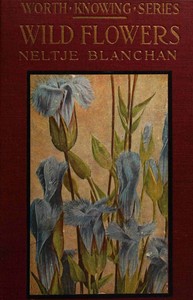
Wild Flowers Worth Knowing

Insectivorous Plants
The Movements and Habits of Climbing Plants

The Fern Lover's Companion

Species Plantarum, Sections I-III

The Botanic Garden, a Poem in Two Parts. Part 1: the Economy of Vegetation

Wild Flowers

Elements of Structural and Systematic Botany
Handbook of the Trees of New England

Hardy Ornamental Flowering Trees and Shrubs

A handbook of some South Indian grasses
The Botanic Garden. Part 2, Containing the Loves of the Plants. A Poem.

Outlines of Lessons in Botany, Part I; from Seed to Leaf

The Variation of Animals and Plants under Domestication — Volume 1

The Different Forms of Flowers on Plants of the Same Species