
Notre-Dame de Paris
by Victor Hugo
"Notre-Dame de Paris" by Victor Hugo is a French Gothic novel published in 1831. Set in 15th-century Paris, it tells the tragic story of Quasimodo, the deformed bell-ringer of Notre-Dame Cathedral, the beautiful Romani dancer Esmeralda, and the obsessed Archdeacon Claude Frollo. Their intertwined fates unfold against the backdrop of the magnificent cathedral itself. A cornerstone of Romanticism featuring impossible love and marginalized characters, the novel also served as Hugo's passionate plea for preserving France's endangered Gothic architecture.
Summary written by Project Gutenberg, by machine.
- Language
- French (Français)
- On Project Gutenberg since
- 29 October 2006
- Read in the last 30 days
- 2,266 times at Project Gutenberg
Listen to it

More by Victor Hugo
See all: More by Victor Hugo
The Memoirs of Victor Hugo
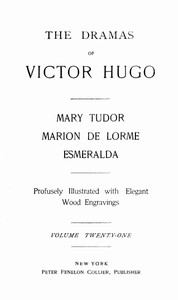
The Dramas of Victor Hugo: Mary Tudor, Marion de Lorme, Esmeralda

Index of the Project Gutenberg Works of Victor Hugo
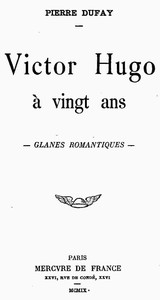
Victor Hugo à vingt ans: Glanes romantiques
Los miserables - Tomo 2 (de 2)
Les Misérables
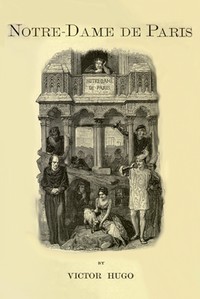
Notre-Dame de Paris

Les misérables Tome I: Fantine
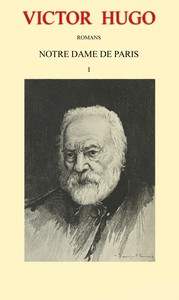
Notre-Dame de Paris - Tome 1

Les misérables Tome V: Jean Valjean

Toilers of the sea

Poems

Les misérables Tome IV: L'idylle rue Plumet et l'épopée rue Saint-Denis

The Man Who Laughs: A Romance of English History

Les misérables Tome III: Marius

Ninety-Three

Les misérables Tome II: Cosette
Les Misérables, v. 1/5: Fantine

Nuestra Señora de París - Tomo 1 (de 2)
Les Misérables, v. 5/5: Jean Valjean
More from the shelf “Harvard Classics”
See all: More from the shelf “Harvard Classics”
Pride and Prejudice
The Odyssey

Crime and Punishment

Meditations

The Prince

History of Tom Jones, a Foundling

The Confessions of St. Augustine

Leviathan
The Legend of Sleepy Hollow

Autobiography of Benjamin Franklin

On the Origin of Species By Means of Natural Selection
Don Quixote

An Inquiry into the Nature and Causes of the Wealth of Nations

Anna Karenina

The Sorrows of Young Werther

Apology

David Copperfield

Don Quijote

Essays by Ralph Waldo Emerson