The Free Press
"The Free Press" by Hilaire Belloc is a political essay written in the early 20th century. The work critiques the contemporary capitalist press, arguing that it distorts information, misleads public opinion, and consolidates power among a wealthy few. Belloc advocates for the significance of a free press as a means to uncover and disseminate the truth. At the start of the essay, Belloc dedicates his work to a friend and reflects on the role of independent media, particularly the papers "The New Age" and "The New Witness," as forces for truth in a landscape dominated by corrupt journalism. He discusses how the great capitalist press arose alongside capitalism itself, detailing its evolution and various corruptions. Belloc emphasizes the necessity of truthful reporting and the ill effects of a press that prioritizes advertising revenue over integrity, ultimately laying the foundation for his argument that the free press can create political reform and public awareness despite facing serious obstacles.
Summary written by Project Gutenberg, by machine.
- Language
- English
- On Project Gutenberg since
- 19 March 2006
- Read in the last 30 days
- 638 times at Project Gutenberg
Listen to it
More by Hilaire Belloc
See all: More by Hilaire Belloc
Mr. Belloc still objects to Mr. Wells's "Outline of history"
The cruise of the Nona
Miniatures of French history
The Catholic Church and history
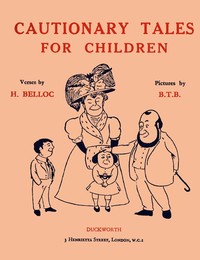
Cautionary Tales for Children
The haunted house
The Bad Child's Book of Beasts
More Beasts (For Worse Children)

The Servile State
Marie Antoinette
The Old Road
The Jews

The French Revolution

Europe and the Faith
The Mercy of Allah
The Path to Rome

More Peers : Verses
A Moral Alphabet
The Modern Traveller