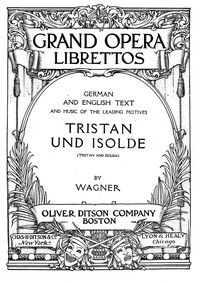
Tristan and Isolda: Opera in Three Acts
"Tristan and Isolda: Opera in Three Acts" by Richard Wagner is a music drama composed between 1857 and 1859. Based on a medieval romance, the opera explores profound themes of insatiable human longing and transcendent love beyond death. Wagner drew inspiration from philosopher Arthur Schopenhauer and his muse Mathilde Wesendonck while creating this work. The opera's revolutionary harmony and famous opening "Tristan chord" marked a defining moment in modern music. Its advanced musical language divided early audiences but grew enormously influential, shaping generations of Western classical composers.
Summary written by Project Gutenberg, by machine.
- Language
- English
- On Project Gutenberg since
- 8 July 2005
- Read in the last 30 days
- 898 times at Project Gutenberg
More by Richard Wagner
See all: More by Richard Wagner
Parsifal
Stories from Wagner
Correspondence of Wagner and Liszt — Volume 1
Correspondence of Wagner and Liszt — Volume 2
My Life — Volume 1
Siegfried & The Twilight of the Gods
The Rhinegold & The Valkyrie
The Flying Dutchman (Der Fliegende Hollaender): Romantic Opera in Three Acts
La Tétralogie de l'Anneau du Nibelung
My Life — Volume 2
The Valkyries
Der Fliegende Hollaender
On Conducting (Üeber Das Dirigiren) : A Treatise on Style in the Execution of Classical Music
Le Vaisseau fantôme (Der Fliegende Holländer)
More from the shelf “Opera”
See all: More from the shelf “Opera”
War and Peace
The Turn of the Screw
Carmen
The Phantom of the Opera
The Sorrows of Young Werther
Library of the World's Best Mystery and Detective Stories
Macbeth

La dame aux camélias
Riders to the Sea
Madame Flirt
Eugene Oneguine [Onegin]
Pamela, or Virtue Rewarded
Operas Every Child Should Know
The Works of Lord Byron. Vol. 5
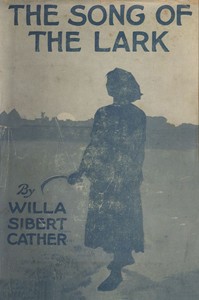
The Song of the Lark
Die Leiden des jungen Werther — Band 1
Woyzeck
The Complete Plays of Gilbert and Sullivan
A House of Pomegranates