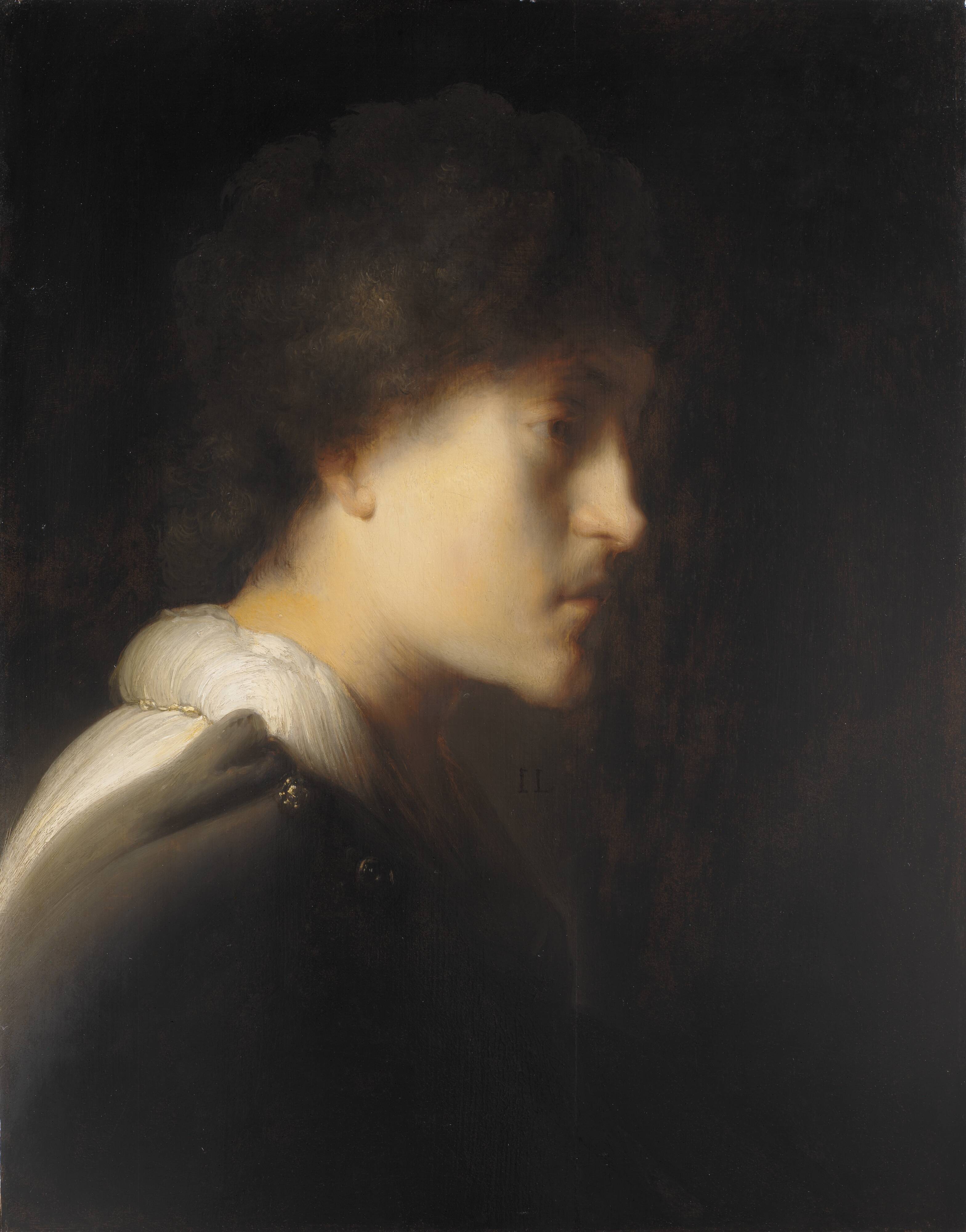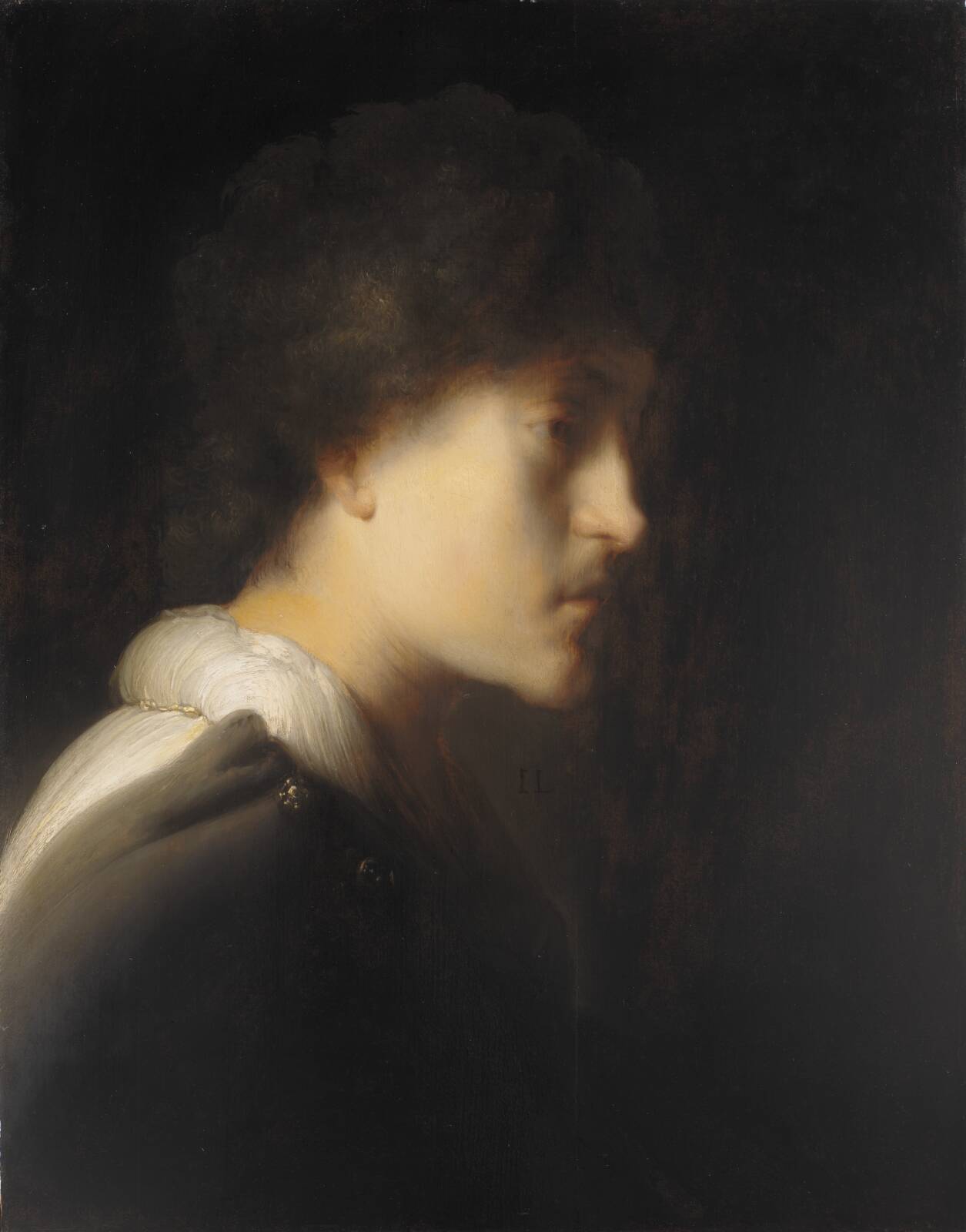
Self-Portrait
Jan Lievens (Dutch, 1607–1674)
1634-1635
- Medium
- Oil on panel
- Classification
- Painting
- Dimensions
- height 52 cm, width 40.5 cm, height 56 cm, width 67.5 cm
- Culture
- Dutch
- Museum
- SMK – National Gallery of Denmark
- Rights
- Public Domain Mark: SMK waives its rights in this photograph, as the museum states it.
- Who can see it
- Tweens profiles and older: its subjects are known and suit older children. How works are placed
View at the SMK – National Gallery of Denmark
About this work
Lievens painted this life-sized por-trait of himself in profile, his face ex-uding a meditative calm. But how can a painter paint himself viewed from the side? Perhaps this was made possible by an ingenious ar-rangement of multiple mirrors. And why paint himself lit from behind so that the face itself is in shadow? The white areas have been painted using thick layers of paint, creating an uneven surface that catches and reflects the light in a shimmering way. By contrast, the rest of the painting uses a succession of thin, smooth layers; when the painting is viewed from a distance and in the right light, the contrast between light and shadow is accentuated. In Lievens’s and Rembrandt’s day the myth of the melancholy artist was in fashion. The shadow across Lievens’s face may refer to this myth, telling us that this was how Lievens wanted the world to see him.