Window mode follows your eyes with your camera, in this browser only: no picture or position leaves your device.
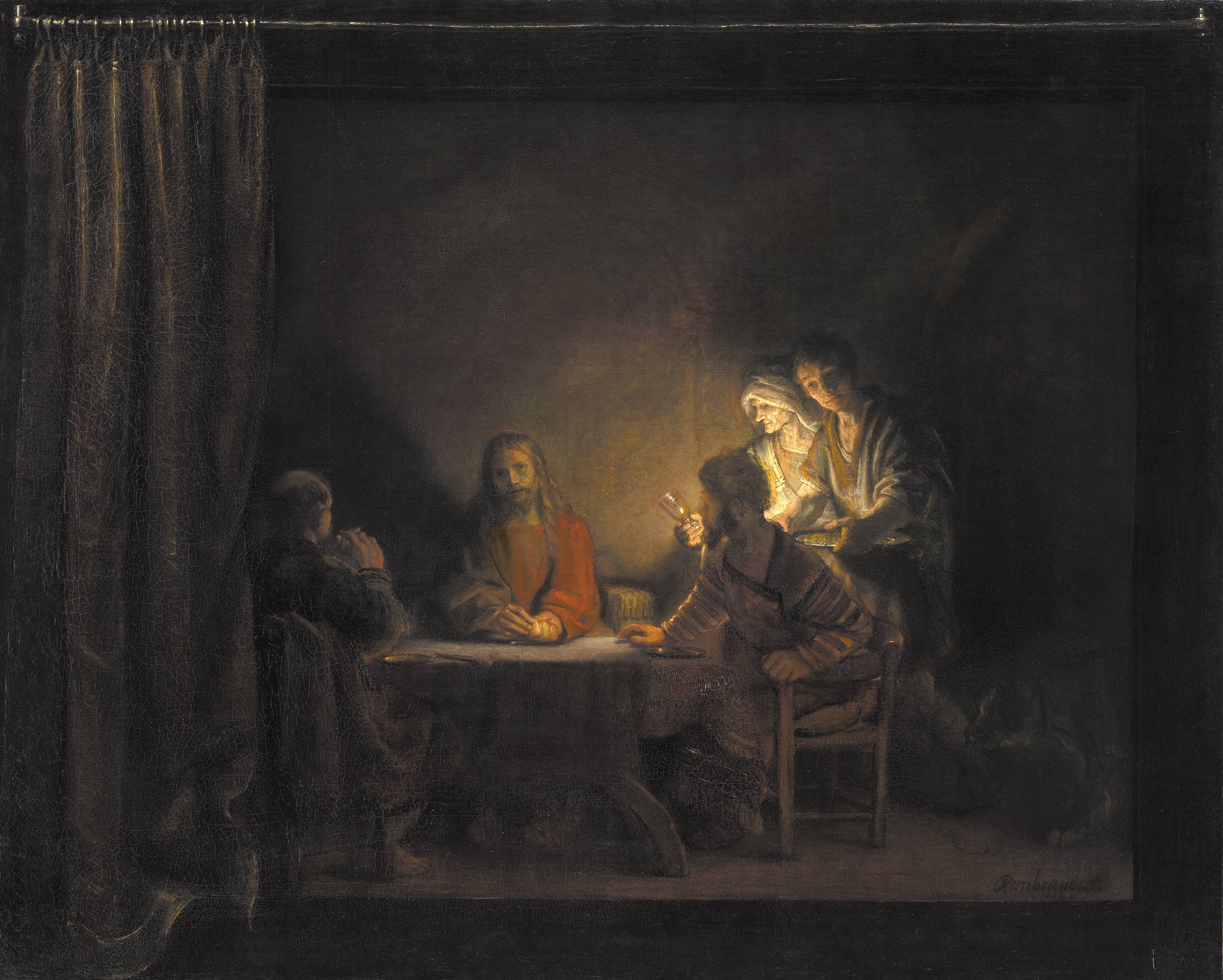
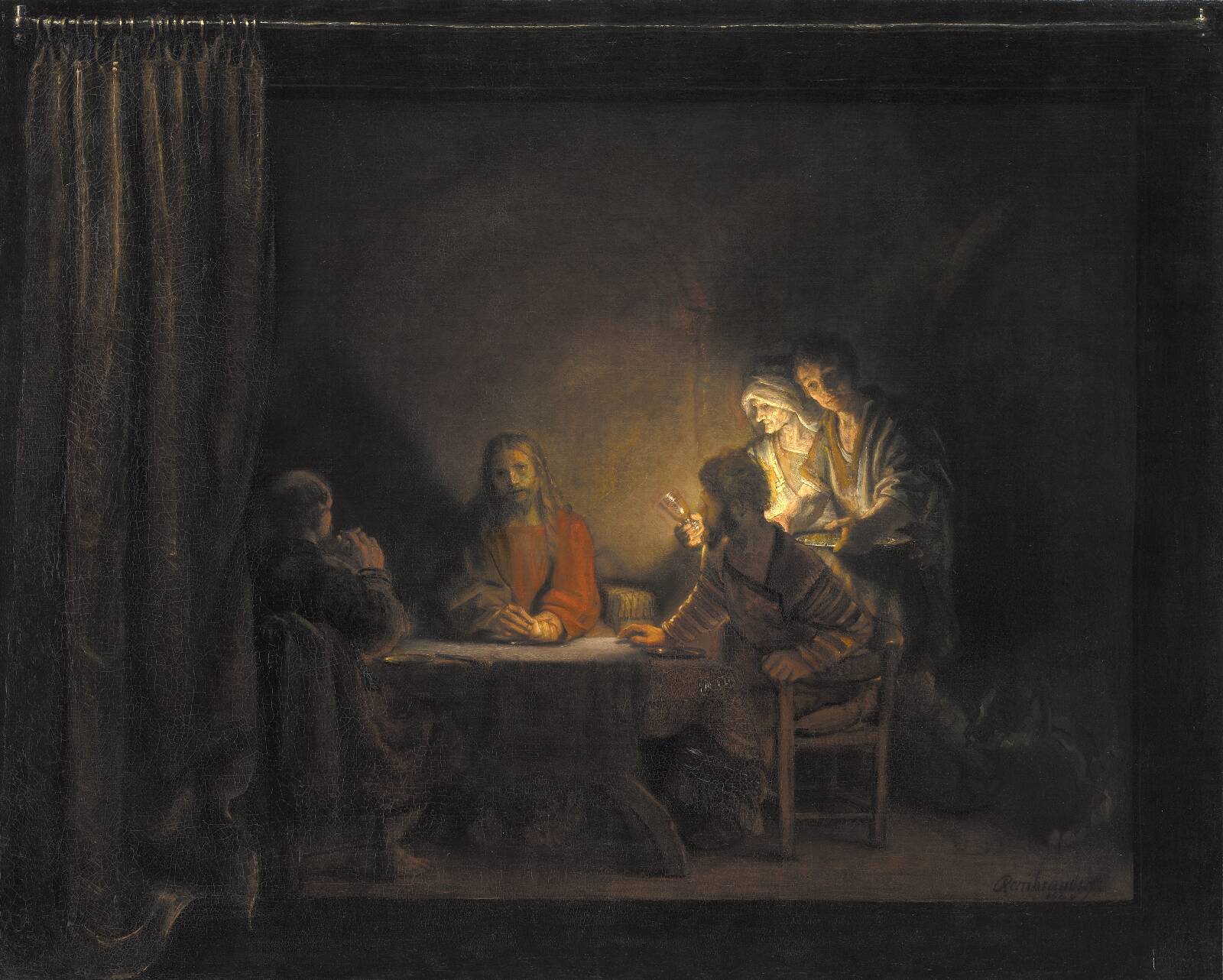
Supper at Emmaus
Rembrandt van Rijn (værksted) (Dutch, 1606–1669)
earlier ascribed to Rembrandt van Rijn (Dutch, 1606–1669)
1648
- Medium
- Oil on canvas
- Classification
- Painting
- Dimensions
- height 89.5 cm, width 111.5 cm, height 108 cm, width 130.2 cm
- Culture
- Dutch
- Museum
- SMK – National Gallery of Denmark
- Rights
- Public Domain Mark: SMK waives its rights in this photograph, as the museum states it.
- Who can see it
- Teens profiles and older: its museum says too little about what it shows to place it for younger viewers. How works are placed
View at the SMK – National Gallery of Denmark
About this work
The Bible relates the story of two disciples who travelled from Jerusalem to the town of Emmaus following the death of Christ. During their travels they meet a stranger who joins them. When arriving at the town they go to an inn where Christ – for it is he – takes the bread, blesses it and breaks it. Only then do the disciples realise that the stranger is Christ risen from the dead. The divinity of Christ is revealed This scene shows the moment where the divinity of Christ is revealed to the disciples (Luke 24: 30-31). Their fright and reverence contrast sharply with the calm and serene demeanour of Christ. The painting's symbolic light With his characteristic use of symbolic light, Rembrandt lets Christ light up the dark space lit by a candle brought in by an unsuspecting kitchen hand. The illusionistic curtain painted in the left-hand side of the picture has been drawn back, accentuating how the scene represents the unveiling of a miracle. The authenticity of the painting The authenticity of this picture has been the object of some debate in recent decades. Many factors indicate that it was painted by assistants in Rembrandt’s workshop on the basis of studies by the master and…