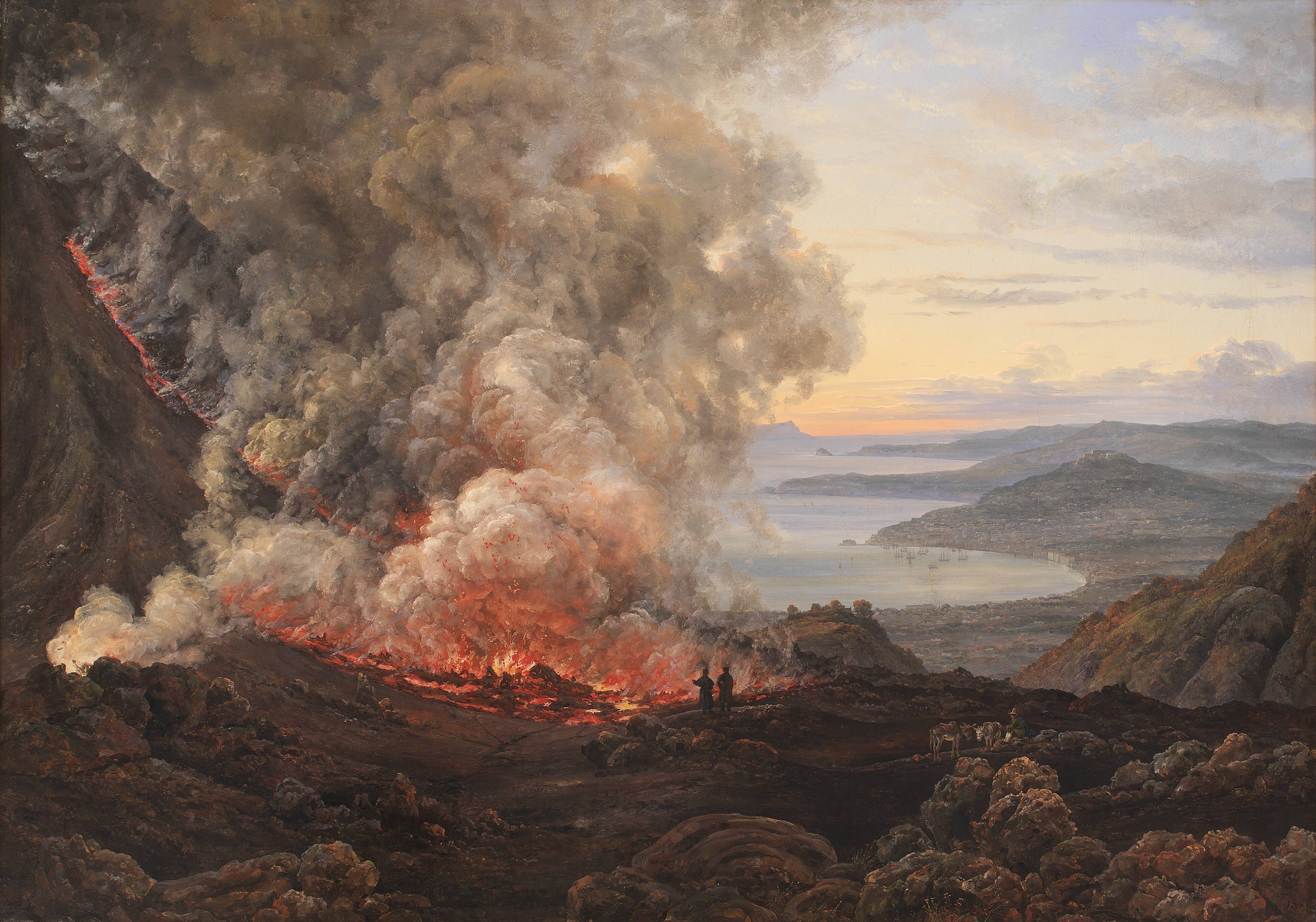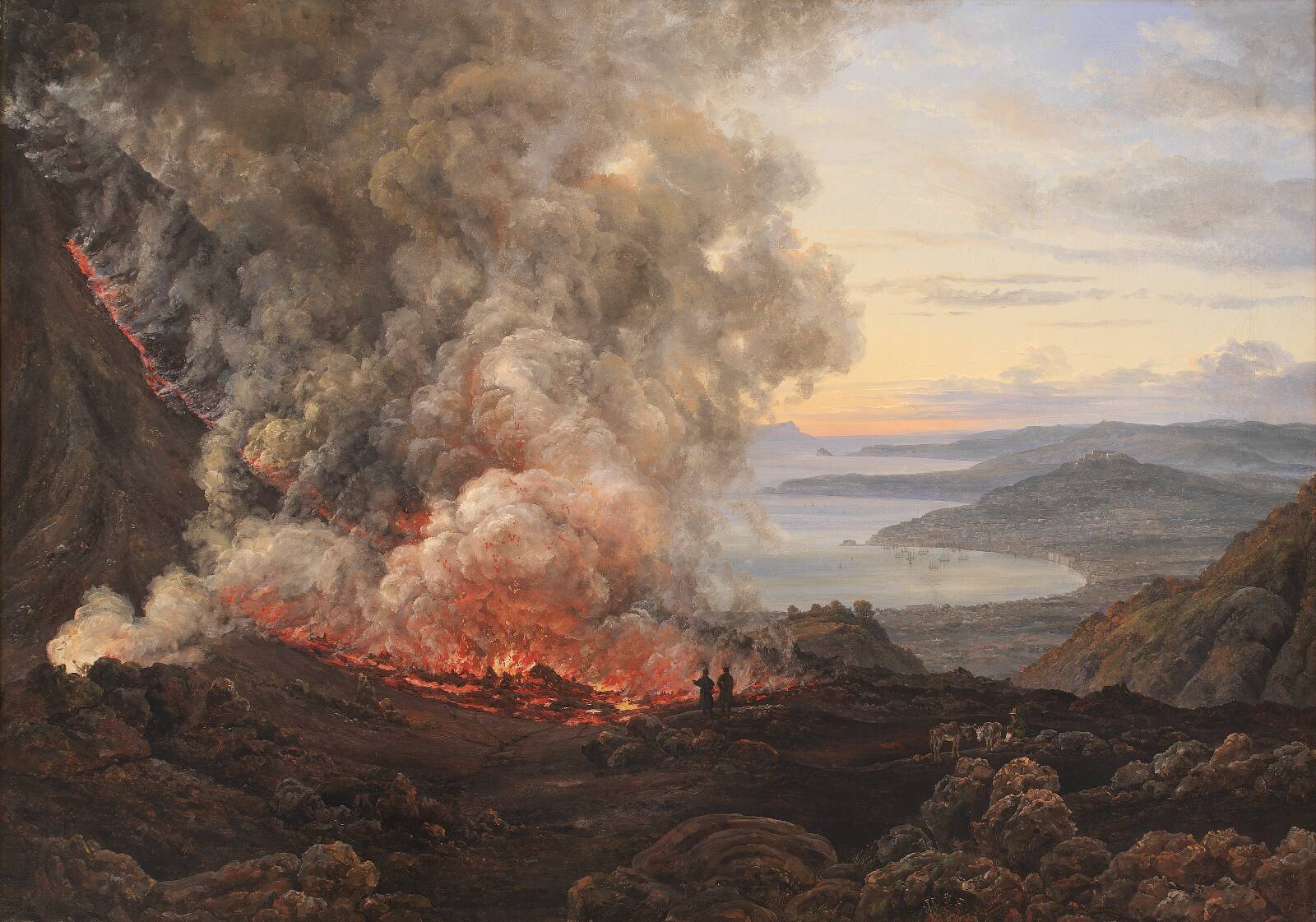
Eruption of the Volcano Vesuvius
J.C. Dahl (Norwegian, 1788–1857)
1821
- Medium
- Oil on canvas
- Classification
- Painting
- Dimensions
- height 98.3 cm, width 137.5 cm, height 124 cm, width 162.7 cm
- Culture
- Norwegian
- Museum
- SMK – National Gallery of Denmark
- Rights
- Public Domain Mark: SMK waives its rights in this photograph, as the museum states it.
- Who can see it
- Tweens profiles and older: its subjects are known and suit older children. How works are placed
View at the SMK – National Gallery of Denmark
About this work
The Norwegian painter J.C. Dahl spent time in Italy in 1820-21, and while in Naples he witnessed the Vesuvius erupting, creating a range of drawings and painted studies of the event from the closest possible range. One of these studies served as the basis for this painting. He repeated the motif six times, a sure indication of its appeal for contemporary audiences. The volcanic eruption as motif The artist described the event as an ”interesting and horribly wondrous sight”, a choice of words that made it clear the volcanic eruption, with all its majesty and horror, should be seen as an example of the kind of awe-inspiring, sublime phenomena that had thrown philosophers, artists, and art lovers into a bittersweet state of dread and titillating awe ever since the early Romantic period. The relationship between man and nature The picture comprises two parts. In the left-hand side Dahl focuses on the relationship between man and the overwhelming spectacle: Two tiny figures serve to indicate the scale of the scene, watching the vast forces of nature with enraptured attention. Looking to the right, however, one begins to suspect that the figures might be thrill-seeking tourists…