Window mode follows your eyes with your camera, in this browser only: no picture or position leaves your device.
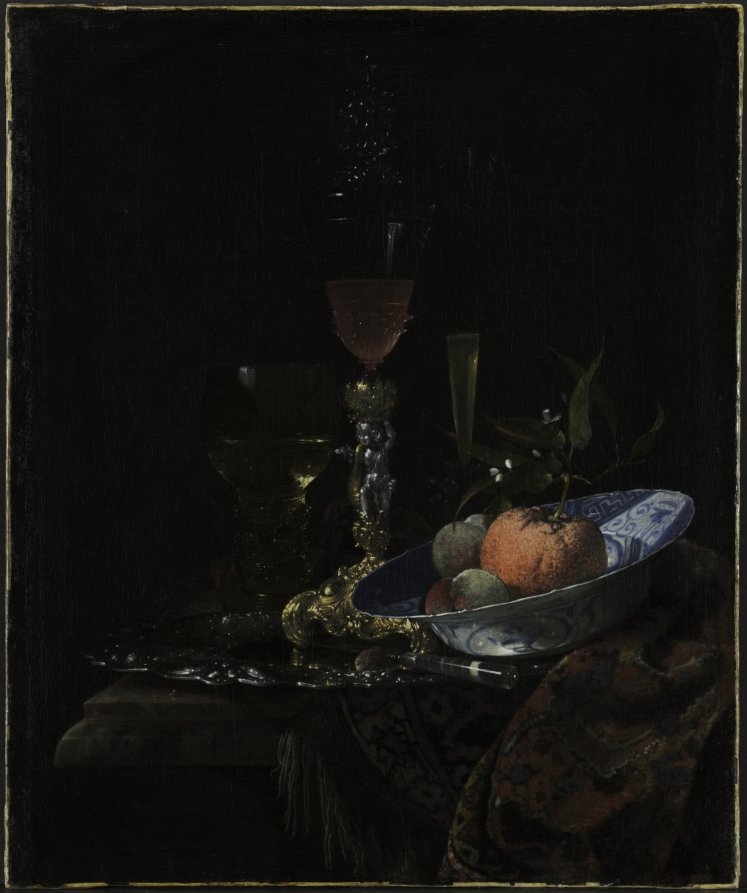
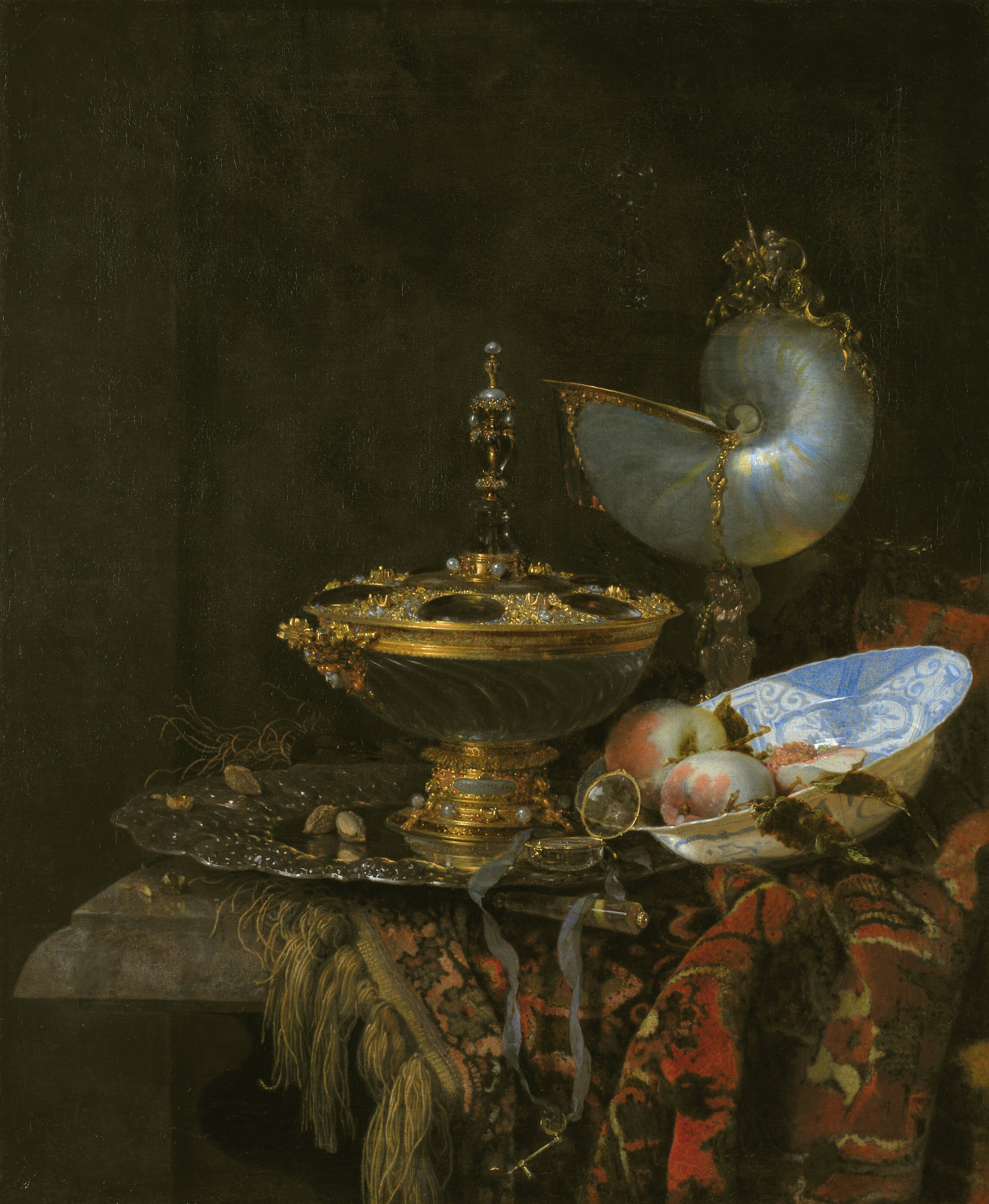
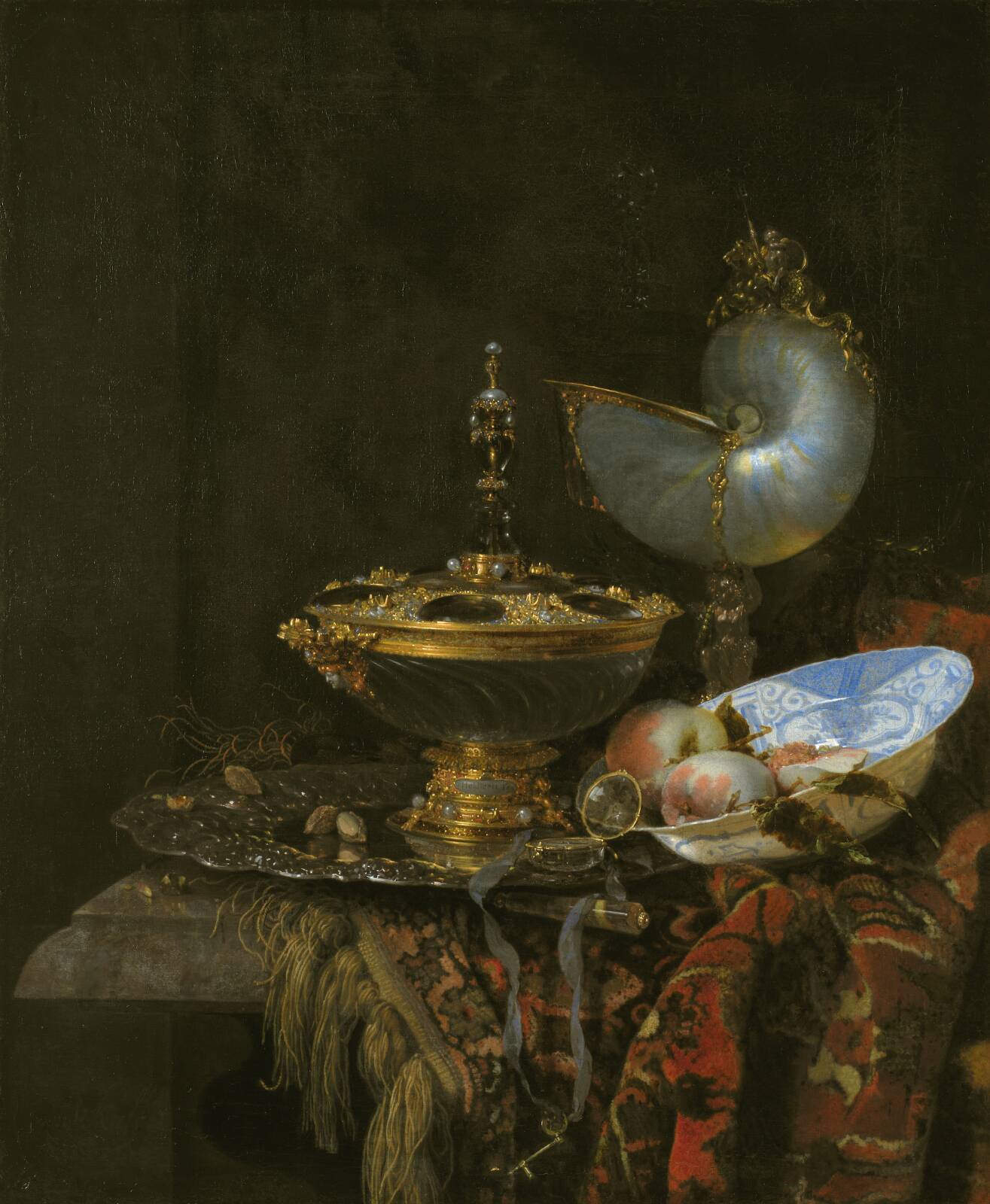
Pronk Still Life with Holbein Bowl, Nautilus Cup, Glass Goblet and Fruit Dish
Willem Kalf (Dutch, 1619–1693)
1678
- Medium
- Oil on canvas
- Classification
- Painting
- Dimensions
- height 68 cm, width 56 cm, height 82.7 cm, width 71 cm
- Culture
- Dutch
- Museum
- SMK – National Gallery of Denmark
- Rights
- Public Domain Mark: SMK waives its rights in this photograph, as the museum states it.
- Who can see it
- Little Ones profiles and older: it shows gentle subjects for the very young. How works are placed
View at the SMK – National Gallery of Denmark
About this work
Willem Kalf came from a wealthy merchant family from Rotterdam. As a young man he went to Paris where he specialised in still lifes and rural interiors. The "Splendid" still life The work shown here is an example of the new canon for the “Pronk” or “Splendid” still life that he established in his mature years. Focusing on only a few objects, Kalf used an evocative clair-obscur style particularly excellent for depicting light reflected in the surfaces of the objects, be it the velvety apricot bowl, the glossy porcelain, or the mother-of-pearl nautilus cup. The still life's objects The objects shown in Kalf’s still life were far beyond the reach of common folk. For example, the lidded vessel of rock crystal with gold trim shown in the middle is the so-called Holbein Bowl owned by Henry 8. (1491-1547) until 1649, a piece that Kalf might have seen in the art galleries of Amsterdam. Between the Holbein Bowl and the porcelain bowl is a pocket watch with an open crystal lid and a key suspended on a blue string. Perhaps the watch is also the key to a moral message that our earthbound materialistic lives will soon come to an end?