Window mode follows your eyes with your camera, in this browser only: no picture or position leaves your device.
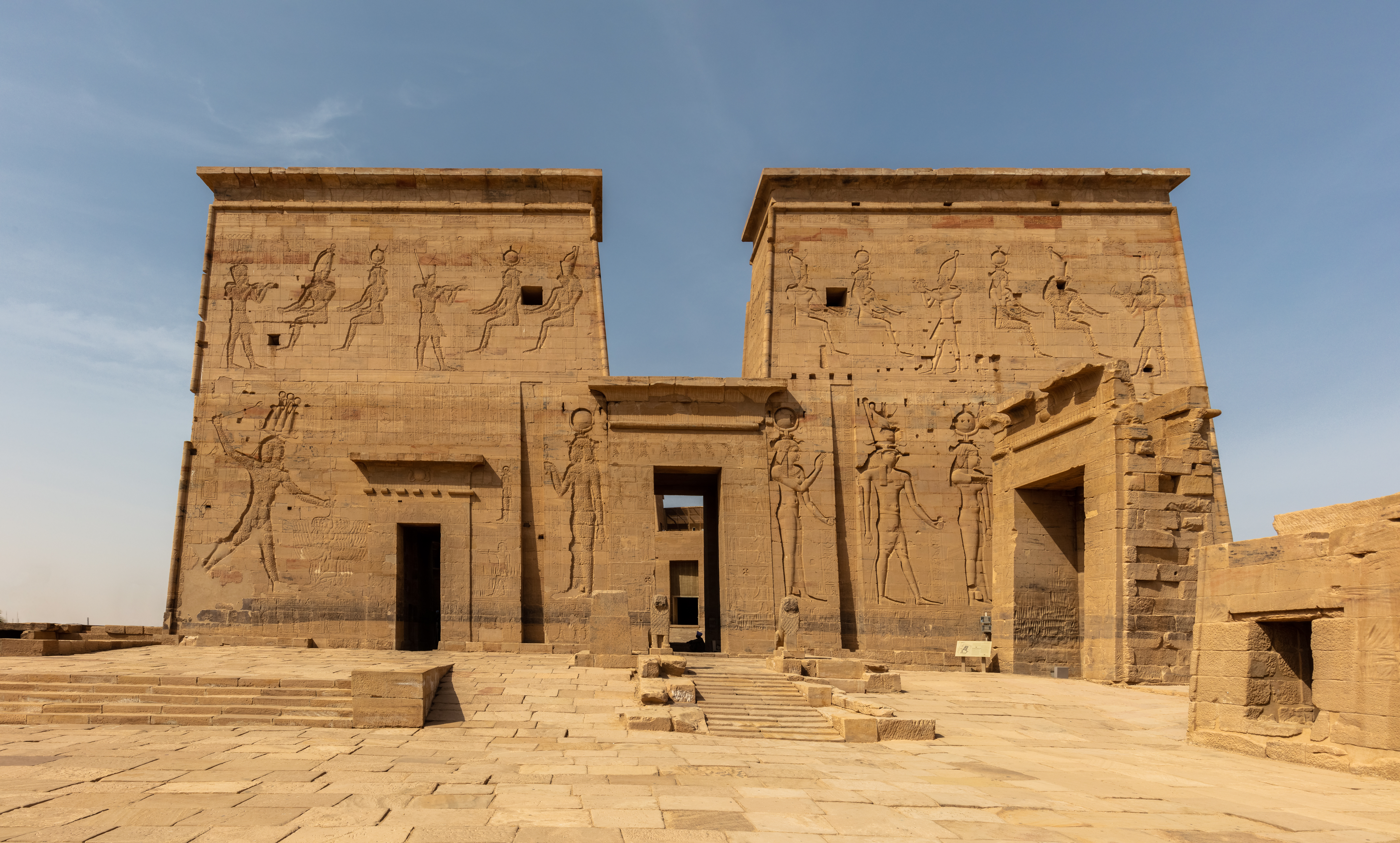
File, Asuán, Egipto, 2022-04-01, DD 144
2022-04-01
- Classification
- Photograph
- Museum
- Wikimedia Commons
- Rights
- CC BY-SA 4.0, as the museum states it.
- Who can see it
- Kids profiles and older: it shows nature, places, still life or a children's book. How works are placed
About this work
The temple for Isis, depicted in this photo, is the most ancientof the Philae temple complex and was built in the reign of Nectanebo I during 380-362 BC. He became the founding pharaoh of the Thirtieth and last native dynasty when he deposed and killed Nepherites II. For the most part, the other ruins date from the Ptolemaic Kingdom, more especially with the reigns of Ptolemy II Philadelphus, Ptolemy V Epiphanes, and Ptolemy VI Philometor (282-145 BC), with many traces of Roman work in Philae dedicated to Ammon-Osiris. The temple complex was located originally on Philae Island, near the expansive First Cataract of the Nile in Upper Egypt. The temple complex was dismantled and moved to nearby Agilkia Island as part of the UNESCO Nubia Campaign project, protecting this and other complexes before the 1970 completion of the Aswan High Dam.