Window mode follows your eyes with your camera, in this browser only: no picture or position leaves your device.
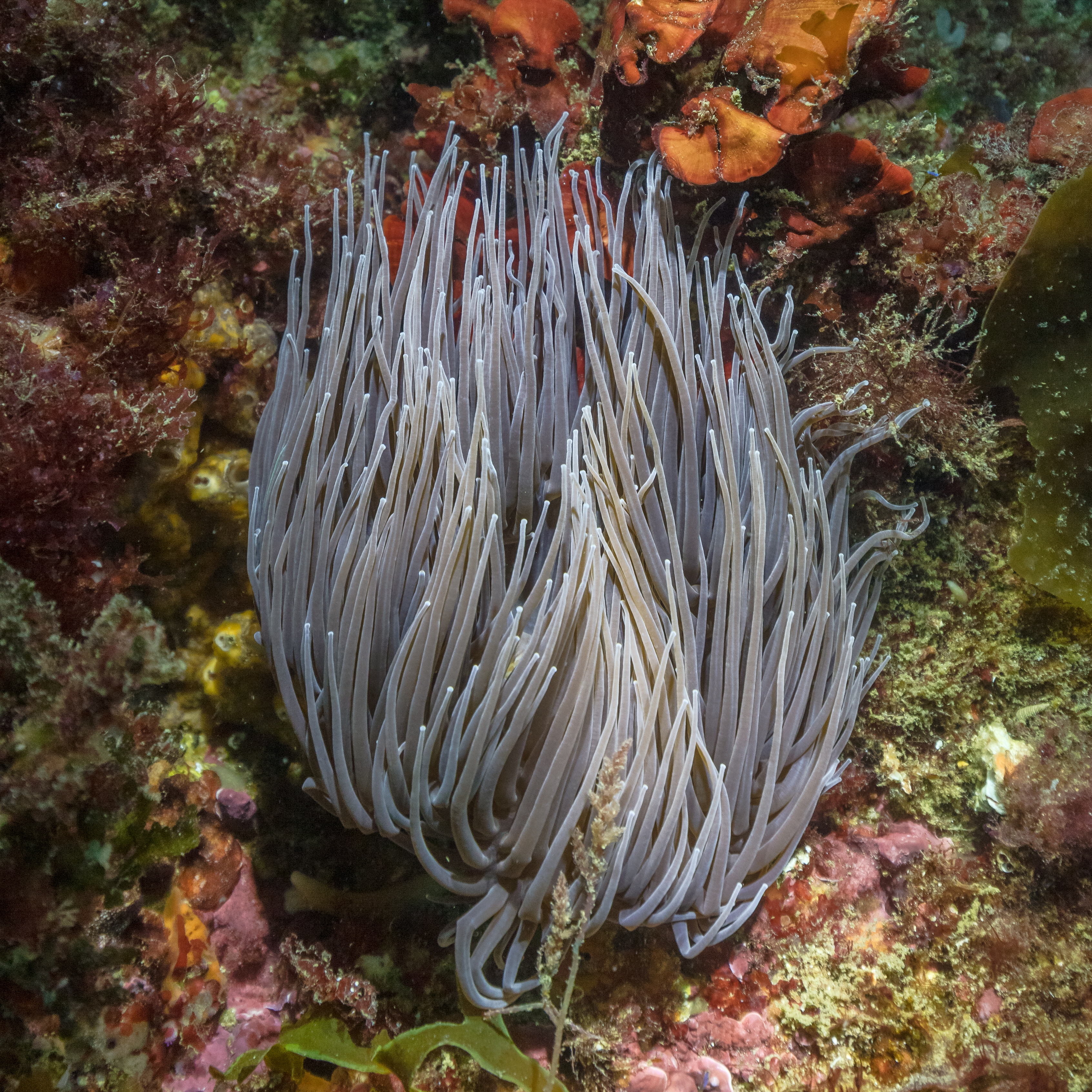
Anémona de mar común (Anemonia viridis), Parque natural de la Arrábida, Portugal, 2020-07-21, DD 07
2020-07-21
- Classification
- Photograph
- Museum
- Wikimedia Commons
- Rights
- CC BY-SA 4.0, as the museum states it.
- Who can see it
- Kids profiles and older: it shows nature, places, still life or a children's book. How works are placed
About this work
Snakelocks anemone (Anemonia viridis), Arrábida Natural Park, Portugal. The snakelocks anemone is a predator, related to jellyfish (but without a medusa stage in their lifecycle), that ensnares prey of suitable size that comes within reach of its tentacles immobilizing it with the aid of their nematocysts (explosive cells that contain one giant secretory organelle that can deliver a sting). The prey is then transported to the mouth and thrust into the pharynx. This species is widely consumed in Andalusia and is known as ortiguillas de mar (literally, "little sea nettles", because it has urticant properties before it is cooked). The whole animal is marinated in vinegar, coated in a tempura-like batter, and deep-fried in olive oil.