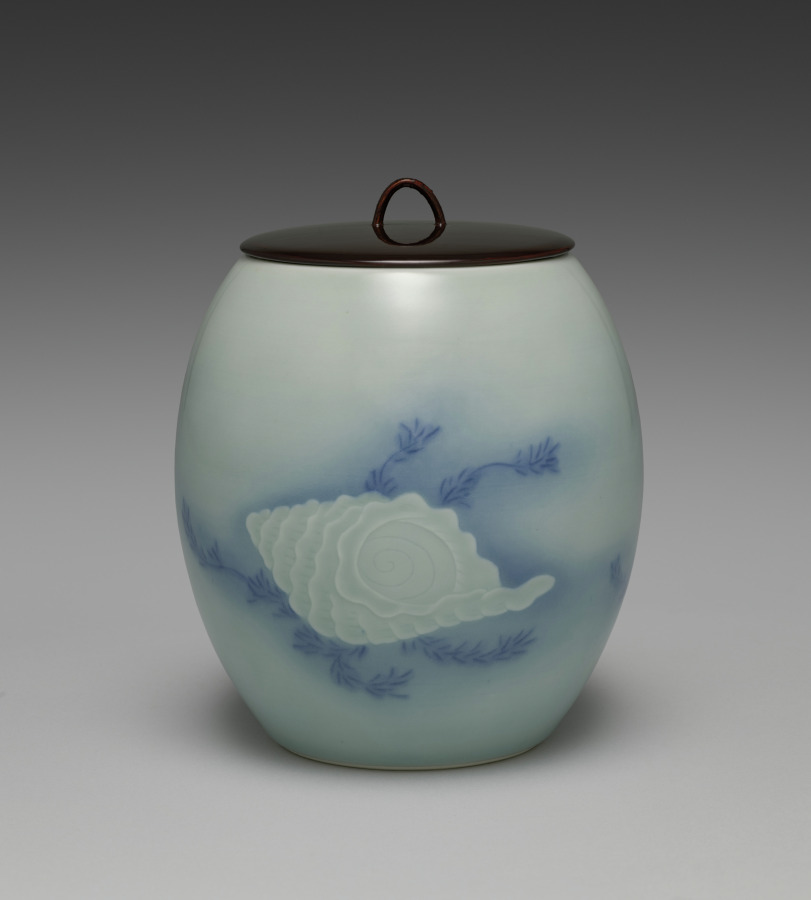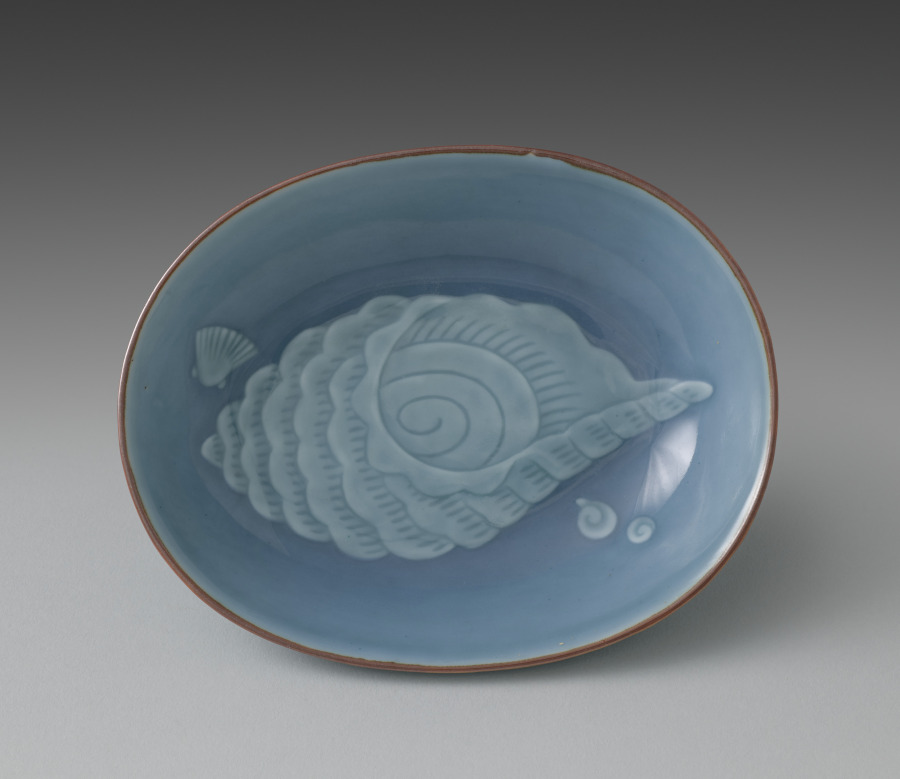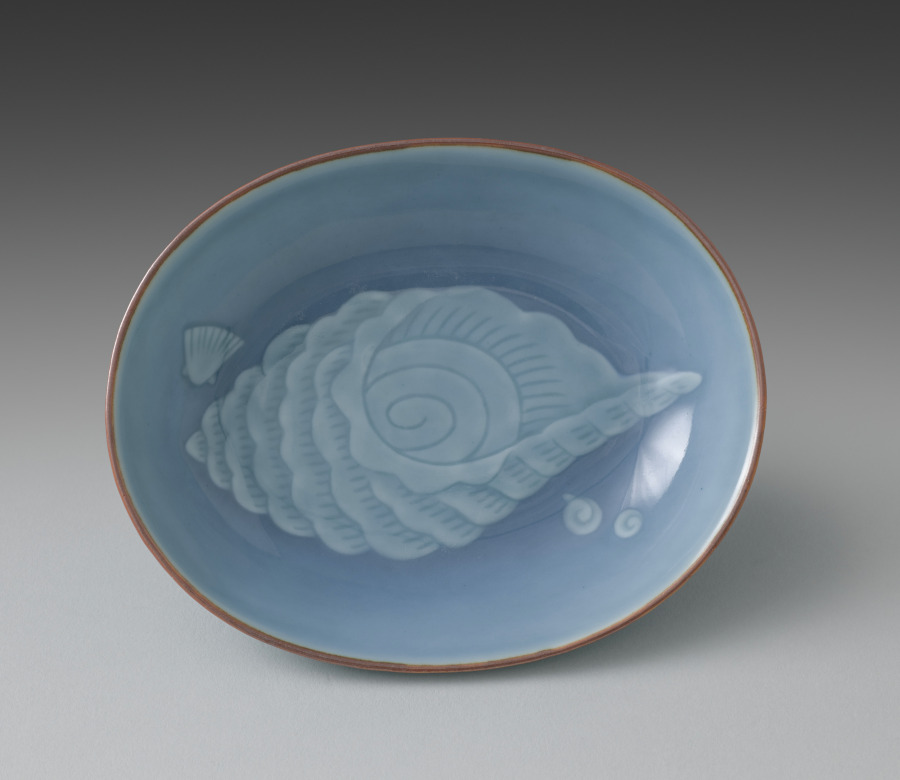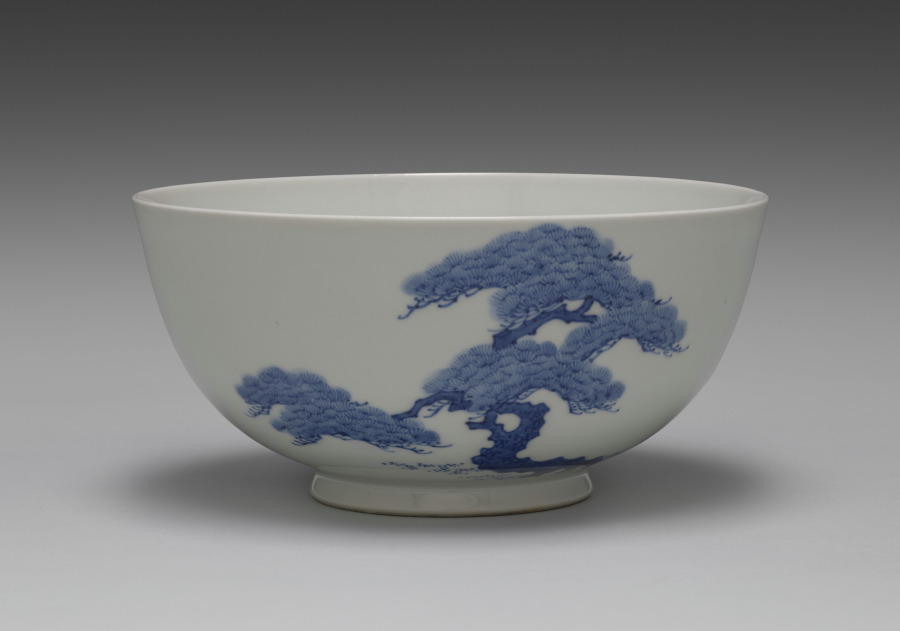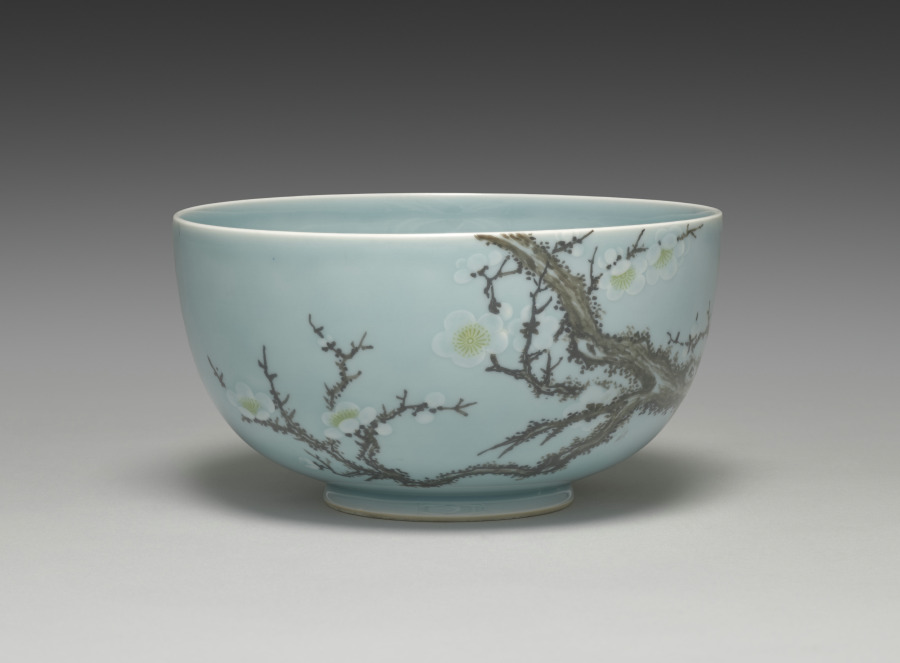
Sweets Bowl with Plum Tree
Seifū Yohei IV (Japanese, 1872–1951)
1914–46
- Medium
- Porcelain with underglaze color and modeled design
- Classification
- Ceramic
- Dimensions
- 11.5 x 21.5 cm (4 1/2 x 8 7/16 in.)
- Culture
- Japan, Taishō period (1912–26) to Shōwa period (1926–89)
- Museum
- Cleveland Museum of Art, Japanese Art
- Credit line
- Gift of James and Christine Heusinger
- Rights
- Public domain (CC0), as the museum states it.
- Who can see it
- Little Ones profiles and older: it shows gentle subjects for the very young. How works are placed
View at the Cleveland Museum of Art
About this work
In Chinese culture, the plum symbolizes the virtue of perseverance. For his sweets bowl based on Qing dynasty (1644–1911) Chinese prototypes, Seifū Yohei IV first painted the gnarled boughs of a plum tree in iron oxide on the surface. Then he made the tree’s blossoms slightly raised by building up slip, or liquified clay. He painted their centers yellow. Before applying the blue glaze, he covered the blossoms with paper so that they remained white.