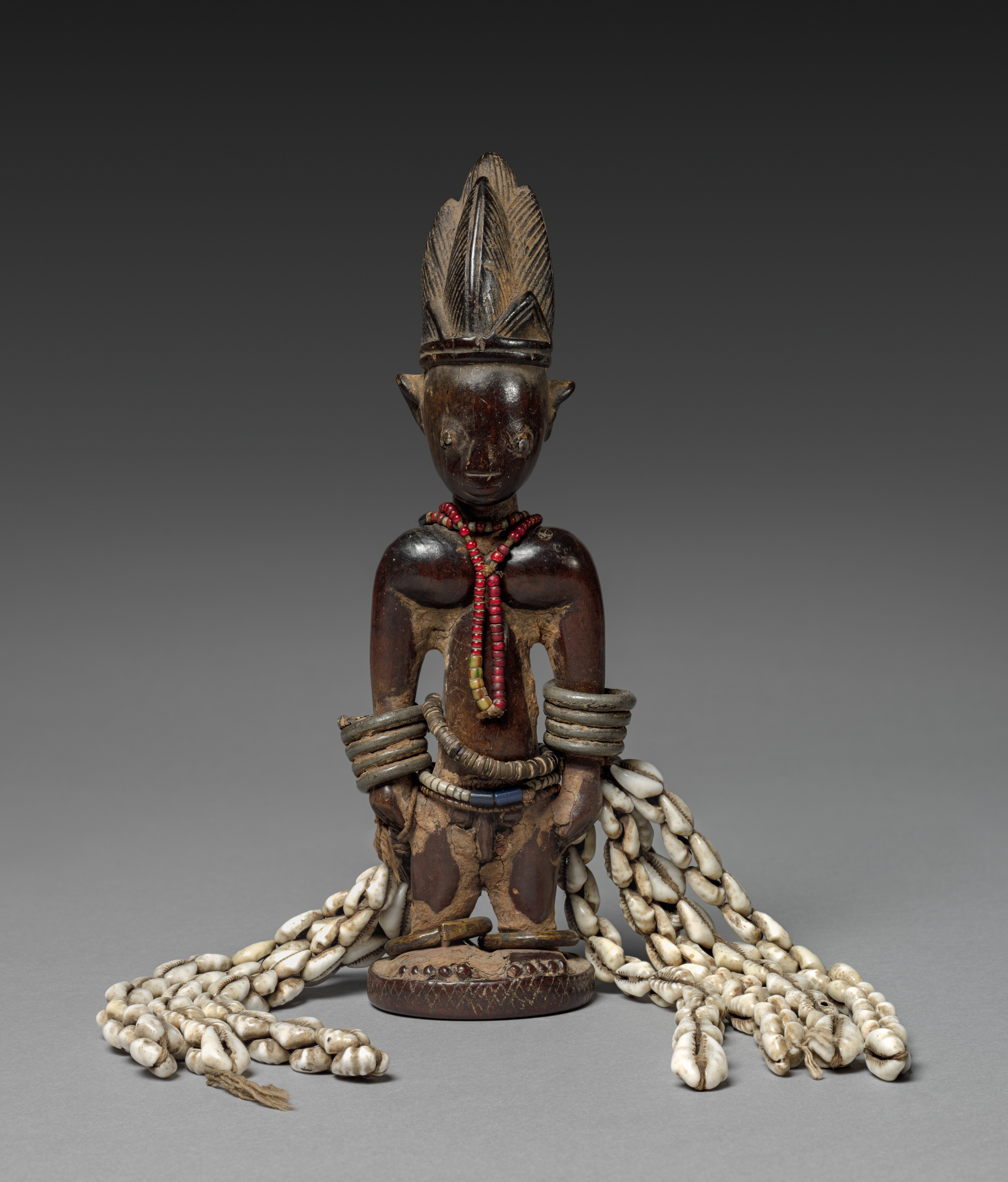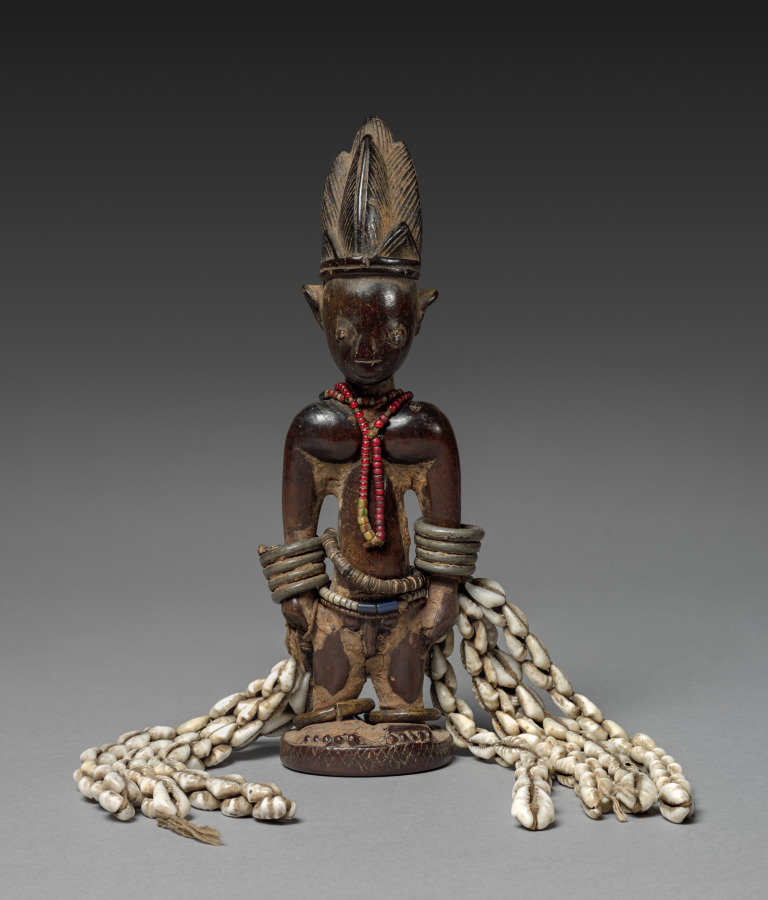
Twin Figure (Ère Ìbejì)
late 1800s–early 1900s
- Medium
- Wood, copper alloy, iron alloy, lead, glass beads, cowrie shells, twine, and pigment
- Classification
- Sculpture
- Dimensions
- Overall: 25.6 x 18.8 x 5.8 cm (10 1/16 x 7 3/8 x 2 5/16 in.)
- Culture
- Africa, West Africa, Nigeria, Yorùbá-style maker
- Museum
- Cleveland Museum of Art, African Art
- Credit line
- Gift of Kim Sherwin
- Rights
- Public domain (CC0), as the museum states it.
- Who can see it
- Tweens profiles and older: its subjects are known and suit older children. How works are placed
View at the Cleveland Museum of Art
About this work
Such a figure is carved when a twin dies in infancy and serves as a memorial to the surviving sibling. These twin figures are always carved to look like adult individuals with idealized physical features. Various body adornments suggest the care parents devote to their children, while the erosion of facial features indicates the symbolic washing and feeding of the figure as a means to connect the soul of the deceased to that of the living twin.