Window mode follows your eyes with your camera, in this browser only: no picture or position leaves your device.
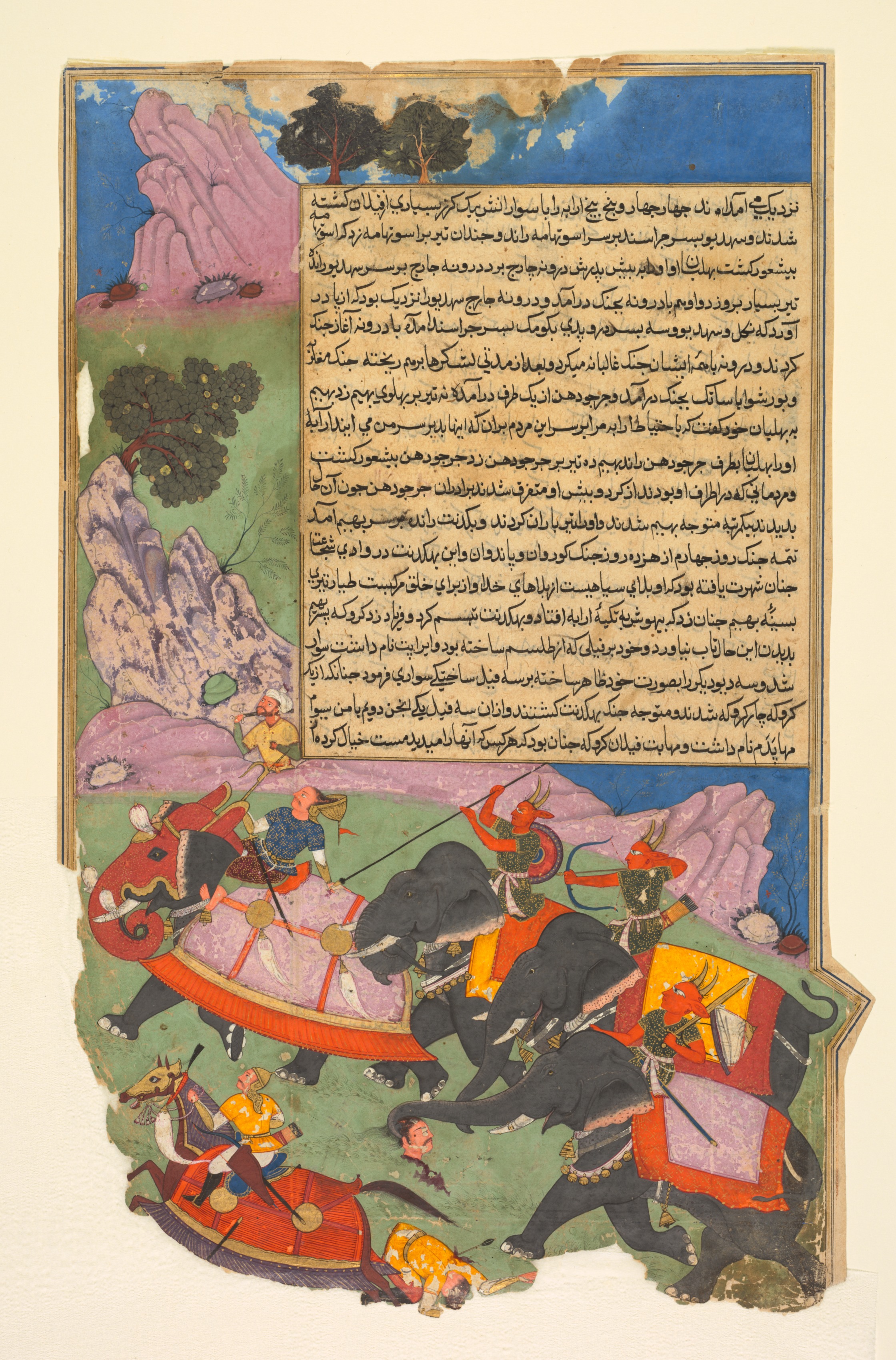
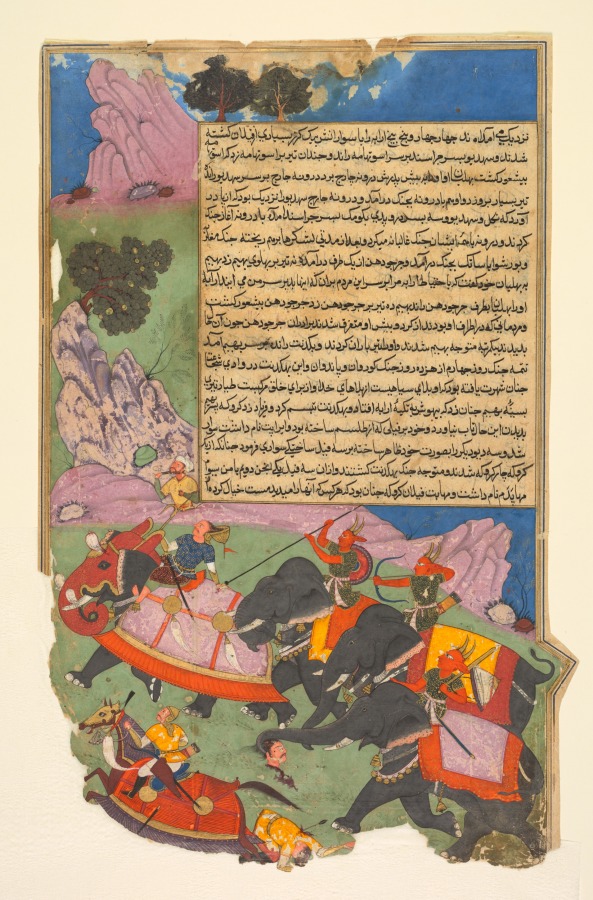
Ghatotkacha and three demons in his company chase Bhagadatta, from Bhishma-parva (volume six) of a Razm-nama (Book of Wars) adapted from the Sanskrit Mahabharata and translated into Persian by Mir Ghiyath al-Din Ali Qazvini, known as…
attributed to Fazl (Indian, active early 1600s)
1616–17
- Medium
- Gum tempera, ink, and gold on paper
- Classification
- Painting
- Dimensions
- Page: 36.7 x 24 cm (14 7/16 x 9 7/16 in.)
- Culture
- Mughal India, court of Jahangir (reigned 1605–27)
- Museum
- Cleveland Museum of Art, Indian and Southeast Asian Art
- Credit line
- Gift in honor of Madeline Neves Clapp; Gift of Mrs. Henry White Cannon by exchange; Bequest of Louise T. Cooper; Leonard C. Hanna Jr. Fund; From the Catherine and Ralph Benkaim Collection
- Rights
- Public domain (CC0), as the museum states it.
- Who can see it
- Teens profiles and older: its subject is for older viewers (war, death, the Passion, drink or the like). How works are placed
View at the Cleveland Museum of Art
About this work
The red demons riding elephants were magically generated in multiples by Ghatotkacha, the son of one of the protagonists of Book of Wars. Though created by magic, the elephant-riding demons still caused problems for their adversaries and forced them to retreat. This scene took place on the fourth of 18 days of heated battle. The Mughal emperor Akbar (reigned 1556–1605) commissioned a translation of the ancient Sanskrit epic Mahabharata into the Mughal court language of Persian and distributed copies to members of his court. He believed that the epic provided insight into how to rule the people of India. The chief minister to both Akbar and his successor, Jahangir, commissioned his own lavishly illustrated copy, from which this page has come.