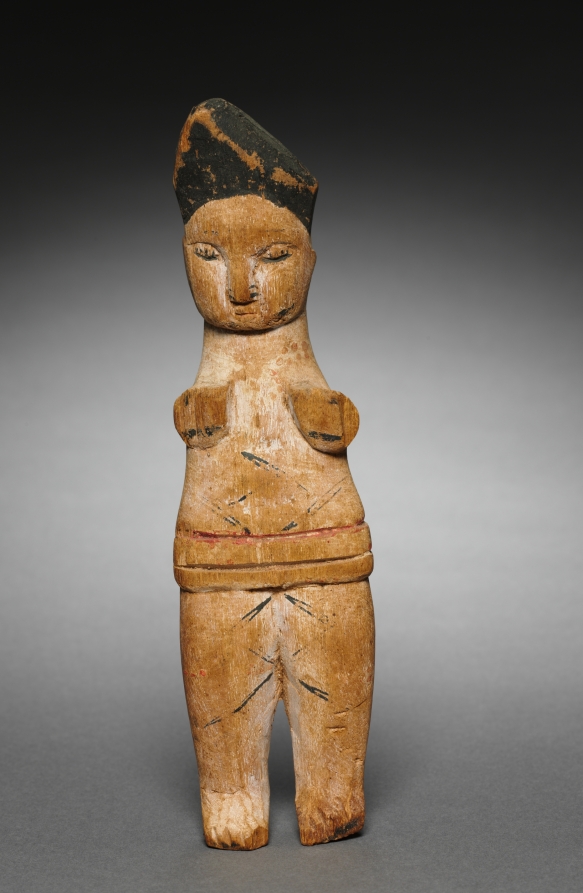
Doll
1900s
- Medium
- Wood, kaolin, and paint
- Classification
- Sculpture
- Culture
- Africa, West Africa, Nigeria, Ibibio style, unknown artist
- Museum
- Cleveland Museum of Art, African Art
- Credit line
- Gift of Harry W. Langworthy
- Rights
- Public domain (CC0), as the museum states it.
- Who can see it
- Teens profiles and older: its museum says too little about what it shows to place it for younger viewers. How works are placed
View at the Cleveland Museum of Art
About this work
Young Ibibio girls would play with dolls for fun. The dolls also took on deeper significance when a girl entered seclusion to go through preparations for adulthood and marriage, representing her future children and promoting her fertility. The kaolin (white clay) that once covered the figures' bodies has been worn off, possibly through handling during play. Thin lines represent uli, a kind of body painting. Upraised, foreshortened hands with open fingers were typical of dolls carved by Ibibio people from the Anang group.