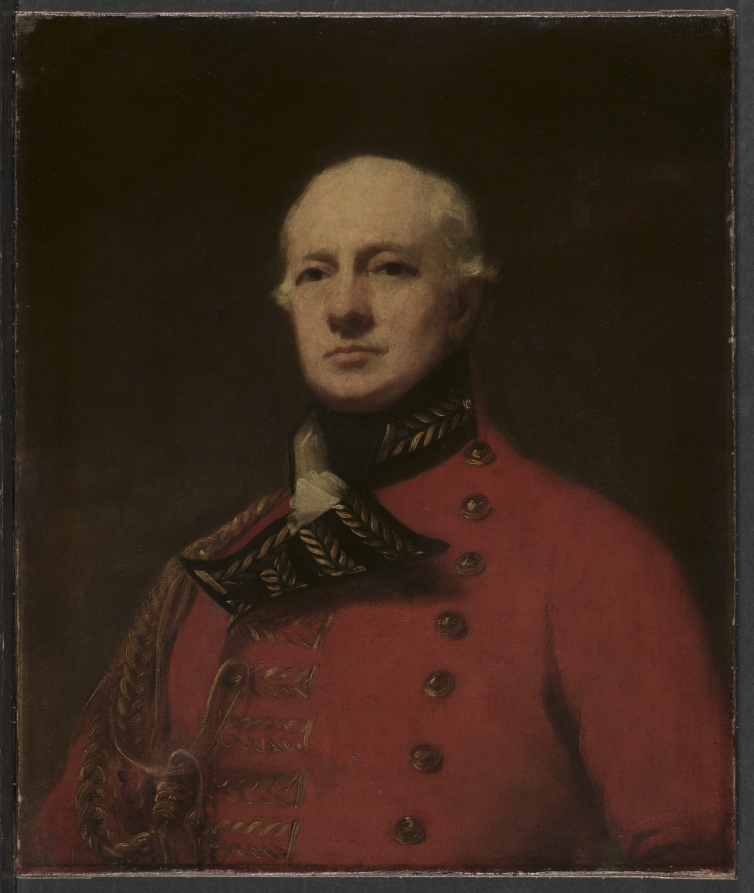
Portrait of Hugh Hope
Henry Raeburn (Scottish, 1756–1823)
c. 1810
- Medium
- oil on canvas
- Classification
- Painting
- Dimensions
- Framed: 94.5 x 82 x 8 cm (37 3/16 x 32 5/16 x 3 1/8 in.); Unframed: 75 x 61 cm (29 1/2 x 24 in.)
- Culture
- Scotland
- Museum
- Cleveland Museum of Art, Modern European Painting and Sculpture
- Credit line
- Gift in honor of Jane Taft Ingalls on the occasion of the Museum's Seventy-fifth Anniversary
- Rights
- Public domain (CC0), as the museum states it.
- Who can see it
- Tweens profiles and older: its subjects are known and suit older children. How works are placed
View at the Cleveland Museum of Art
About this work
Henry Raeburn created this likeness of fellow Edinburgh native Hugh Hope before Hope departed for India, where he worked as a civil servant for the renowned East India Company (a British joint-stock company founded in 1600 to trade in the Indian Ocean). This painting hung in the drawing room of Hope’s estate, Pinkie House in Scotland, until 1928. Although greatly influenced by his English predecessor Joshua Reynolds, Raeburn worked in a looser style, more like the work of his younger contemporary Thomas Lawrence. This portrait is painted directly on the canvas without any preliminary drawing, giving it an informal, spontaneous air.