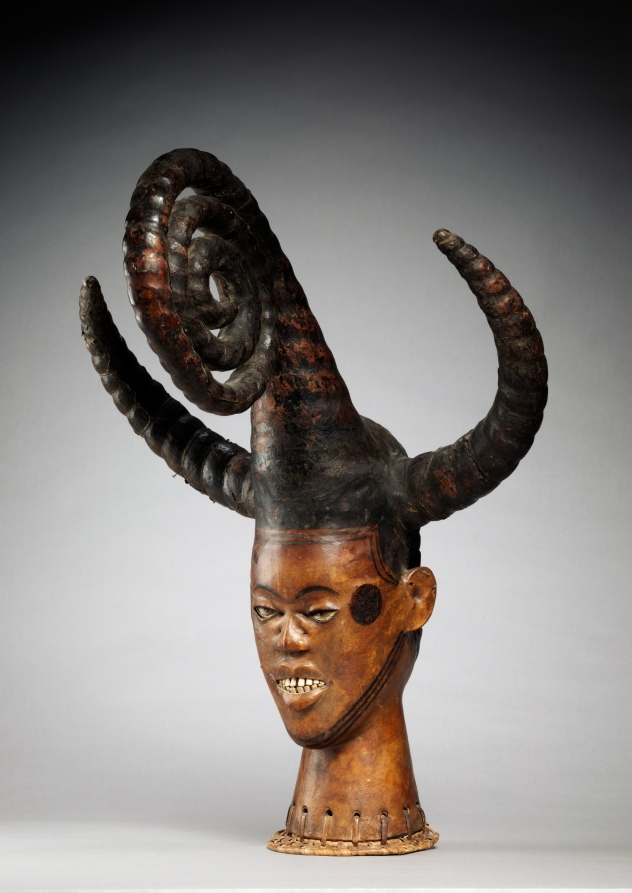
Headdress
early 1900s
- Medium
- Wood, rawhide, cane, paint, bone, natural fiber, and metal
- Classification
- Mask
- Dimensions
- Overall: 67.3 x 43.2 x 43.2 cm (26 1/2 x 17 x 17 in.)
- Culture
- Africa, West Africa, Nigeria, Ejagham-style maker
- Museum
- Cleveland Museum of Art, African Art
- Credit line
- Andrew R. and Martha Holden Jennings Fund
- Rights
- Public domain (CC0), as the museum states it.
- Who can see it
- Tweens profiles and older: its subjects are known and suit older children. How works are placed
View at the Cleveland Museum of Art
About this work
Headdresses or crest masks made of antelope skin stretched over a carved head are a distinctive art form of the Cross River region in southeastern Nigeria and western Cameroon. Worldwide, this practice is unique. This female evocation of ideal feminine beauty was most probably worn by an Ejagham woman in the context of a female society called Ekpa, which was responsible for girls' education in preparation for marriage. The headdress represents a girl who evokes ideal female beauty and is ready for marriage. The depicted hairstyle was worn during the coming-out ceremony following the girls’ seclusion.


