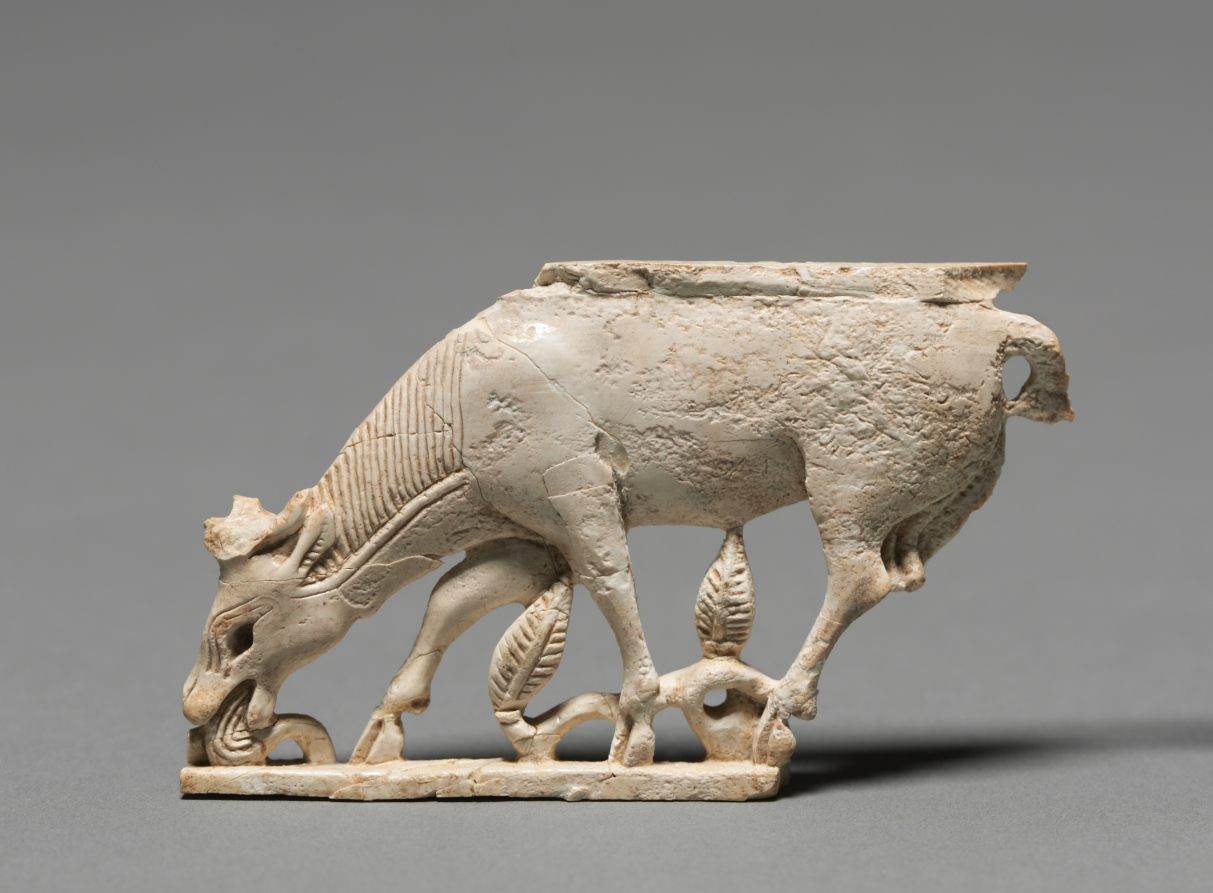
Decorative Plaque: Browsing Stag
900–800 BCE
- Medium
- ivory
- Classification
- Ivory
- Dimensions
- Overall: 4.5 x 8.9 cm (1 3/4 x 3 1/2 in.)
- Culture
- Phoenicia, Iraq, Nimrud
- Museum
- Cleveland Museum of Art, Egyptian and Ancient Near Eastern Art
- Credit line
- Purchase from the J. H. Wade Fund
- Rights
- Public domain (CC0), as the museum states it.
- Who can see it
- Little Ones profiles and older: it shows gentle subjects for the very young. How works are placed
View at the Cleveland Museum of Art
About this work
This small plaque was executed in the Phoenician style with symmetrical compositions, elongated figural proportions, and Egyptian subjects and motifs. Examples have been found throughout the Middle East, but thousands come from Nimrud where most were excavated in the storerooms of a military arsenal built by King Shalmaneser II (858-824 bc). When the Nimrud palace was sacked in the 7th century bc, these ivories were thrown into a well, where Sir Max Mallowan (the husband of Agatha Christie) discovered them in 1951. The monumental wall relief (1943.246) was found at the same Assyrian palace at Nimrud.


