Window mode follows your eyes with your camera, in this browser only: no picture or position leaves your device.
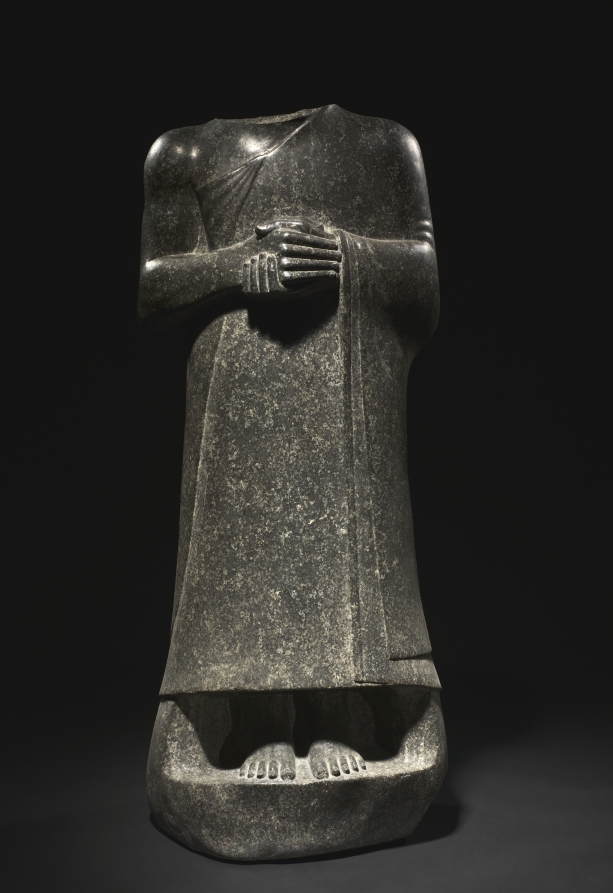
Statue of Gudea
c. 2144–2124 BCE
- Medium
- dolerite
- Classification
- Sculpture
- Dimensions
- Overall: 126 x 55 x 36 cm (49 5/8 x 21 5/8 x 14 3/16 in.)
- Culture
- Mesopotamia, Neo-Sumerian, Iraq, Girsu
- Museum
- Cleveland Museum of Art, Egyptian and Ancient Near Eastern Art
- Credit line
- Purchase from the J. H. Wade Fund
- Rights
- Public domain (CC0), as the museum states it.
- Who can see it
- Tweens profiles and older: its subjects are known and suit older children. How works are placed
View at the Cleveland Museum of Art
About this work
This headless figure’s clasped hands create a distinctive gesture that recurs frequently on more than 30 recorded statues of the Mesopotamian ruler Gudea. Between c. 2144–2124 BCE, Gudea ruled as ensi (governor) of the city-state of Lagash, located in modern-day Iraq. Scholars have identified more than 2,400 inscriptions that describe his reign, which included patronage of the arts and an extensive building program. Statues like this one would have been placed in temples as stand-ins for Gudea himself, demonstrating his devotion and piety.