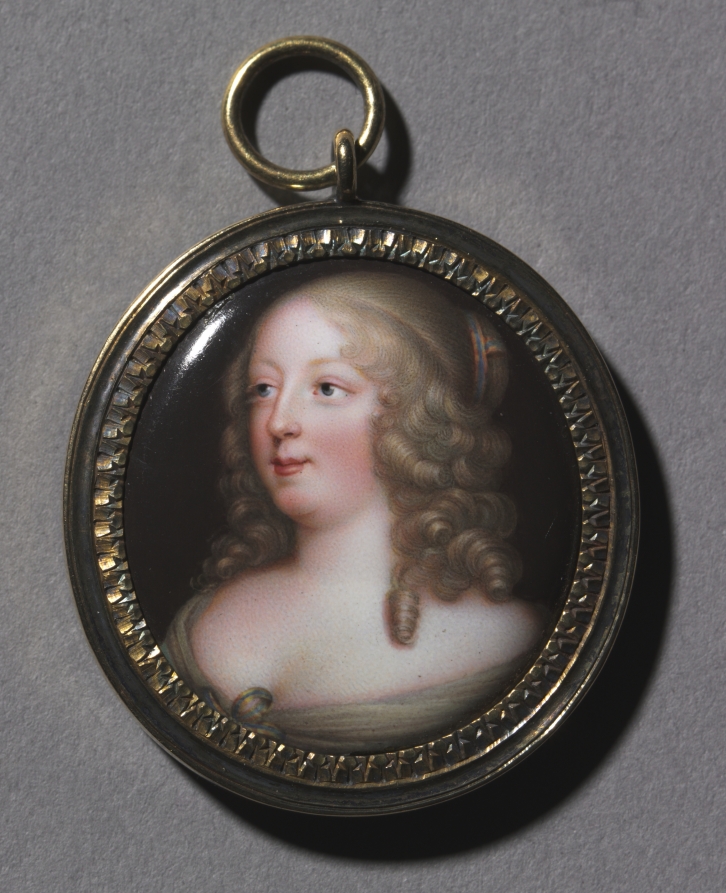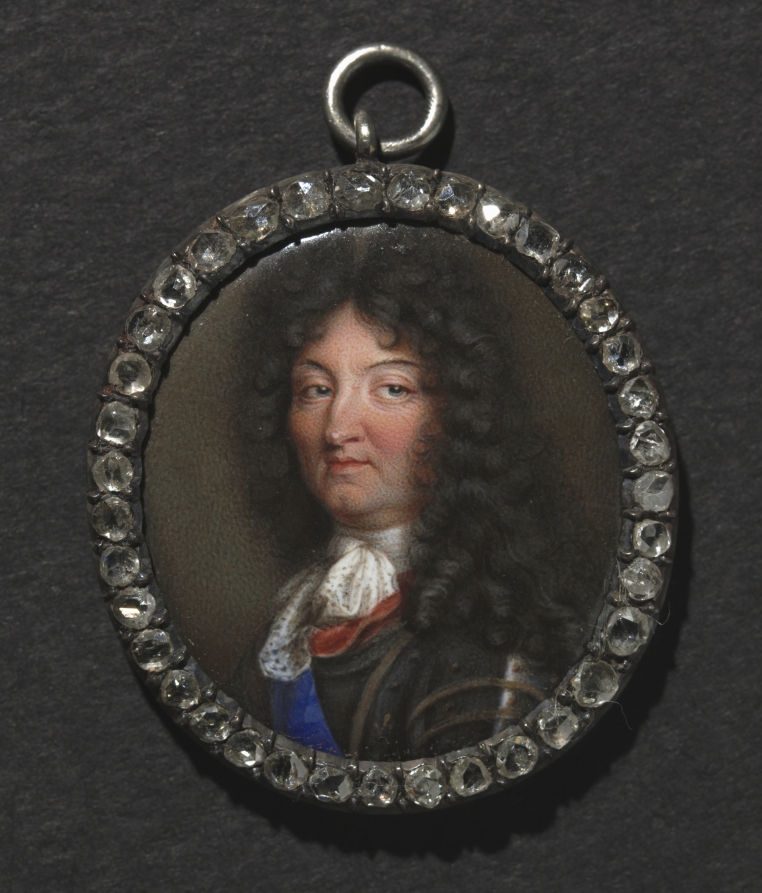
Portrait of King Louis XIV
school of Jean Petitot (Swiss, 1607–1691)
1600s
- Medium
- enamel in a silver and diamond frame
- Classification
- Portrait Miniature
- Dimensions
- Framed: 3.4 x 3.1 cm (1 5/16 x 1 1/4 in.); Unframed: 2.8 x 2.4 cm (1 1/8 x 15/16 in.)
- Culture
- France
- Museum
- Cleveland Museum of Art, European Painting and Sculpture
- Credit line
- The Edward B. Greene Collection
- Rights
- Public domain (CC0), as the museum states it.
- Who can see it
- Teens profiles and older: its subject is for older viewers (war, death, the Passion, drink or the like). How works are placed
View at the Cleveland Museum of Art
About this work
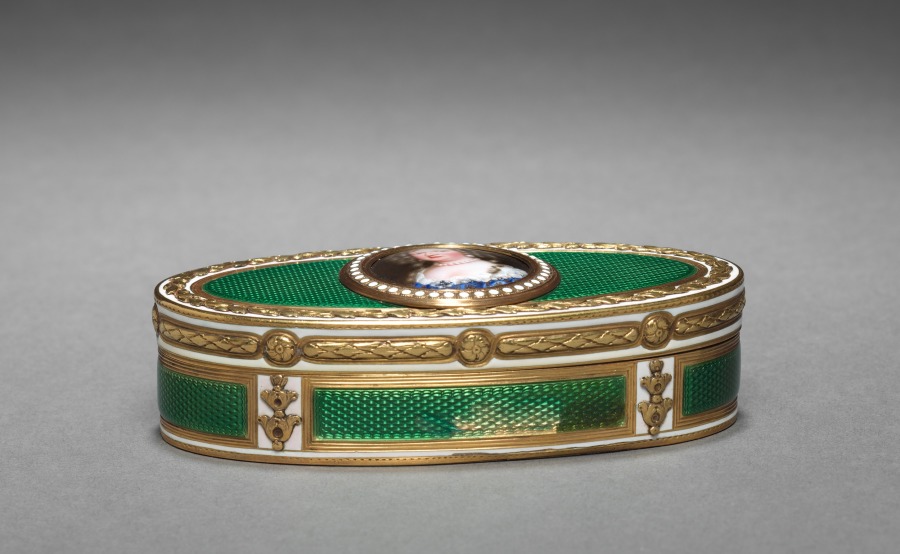
Unlike fragile portrait miniatures painted in watercolor on vellum or ivory, which are prone to cracking, fading, and flaking, enamels are resilient, impervious to the effects of light, and retain their striking original colors over time. Partly for this reason enamel was considered ideal for reproducing famous paintings and treasured portraits in a reduced and luminous form. The complicated and labor-intensive process of enameling required the artist to fire numerous layers of colored metal oxide at different temperatures. This process made it difficult to produce a faithful portrait likeness, though masters of the medium were able create portraits of remarkable subtlety imbued with the sitter's personality. The heyday of enamel painting was the late-seventeenth and early eighteenth centuries. Among the enamel specialists was the Swiss Jean Petitot, who was patronized by English King Charles I, French King Louis XIV, and Polish King John III Sobieski. His workshop produced many versions of this portrait of King Louis XIV, which would have been much in demand as a diplomatic gift from the king to loyal courtiers or foreign allies.