Woman's Day Dress
Made in France with cotton imported from India
c. 1800
- Medium
- Cotton, hand-spun, hand-woven plain weave called mulmul or muslin
- Classification
- Costume and Accessories
- Dimensions
- Approximately: H.: 152.4 cm (60 in.)
- Culture
- India
- Museum
- Art Institute of Chicago, Textiles
- Credit line
- Belle M. Borland Endowment Fund
- Rights
- Public domain (CC0), as the museum states it.
- Who can see it
- Tweens profiles and older: its subjects are known and suit older children. How works are placed
View at the Art Institute of Chicago
About this work
Indian cotton weavers have been creating delicate, sheer textiles for hundreds, if not thousands, of years. Elite men and women on the Indian subcontinent valued such fine, cotton muslin—a specialty of Bengal that was made entirely by hand—for fashionable clothing.
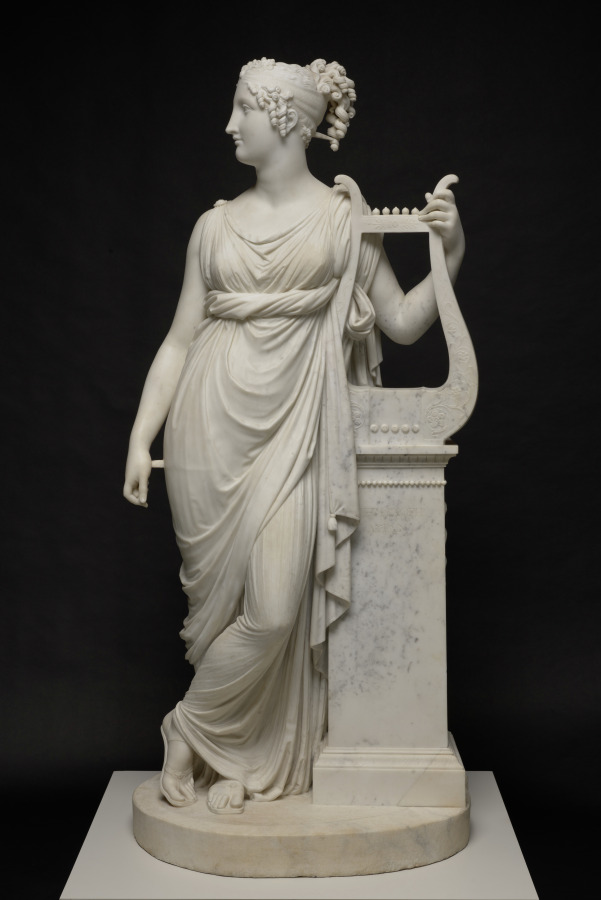
White cotton dresses first appeared in French fashion in the 1780s; the simplicity of the delicate column-like silhouette was seen as an ideal expression of Neoclassical femininity, a look inspired by Classical Greek and Roman statuary. The quality of this cotton was nearly impossible to replicate using European industrial methods, adding to its cachet.
Description © Art Institute of Chicago, CC BY 4.0